Change and Consequence

Adam Tooze, the British historian now based at Columbia in New York, has just published an excellent contemporary world analysis in the London Review of Books: https://www.lrb.co.uk/the-paper/v42/n08/adam-tooze/shockwave A specialist in financial history and its impact upon social and political evolution, he skilfully traces interaction between the rise of COVID-19 and the financial/economic chaos it has generated so quickly: https://adamtooze.com/

It is a long-form read, but these days we do have the time, right?

The value of the piece is not just its clarity about the interaction of forces over the past twenty years or so that has brought us to this point, but it’s pointing up of how seemingly small consequences actually have a major bearing on international developments.

Virus and econonmy

My recent posts, for example, have discussed the role of the now-reviled cruise ships in the spread of the virus. Since then, Western Australian Premier Mark McGowan has said publicly that he wants them to go away and not come back, forgetting that just a short time ago those ships and their passengers were considered a godsend for a state whose economic fortunes have slumped in recent years.

The focus for McGowan and a host of other journalists, podcasters, bloggers and tweeters has been on the passengers aboard and leaving those ships, with many of those commentators wishing for or confidently predicting those would be the last ever such passengers.

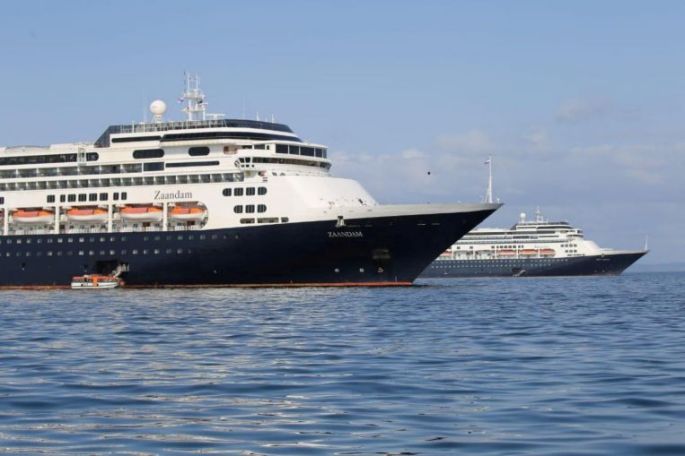
But I also spoke about the crew and, sadly, this week brought news of the COVID-19 death of an Indonesian crew member on the Zaandam that was for Americans what the Ruby Princess became for Australia.

That was Wiwit Widarto, a fifty years old Indonesian whose sad passing has attracted little detailed attention, another name in the growing list of victims that also points to a wider condition.

Filipino Crew

Indonesians and Filipinos have long made up the crew and service staff on the majority of cruise ships, and their discipline is amazing. Talk to most of them and they are away from home and families for several months at a stretch. As soon as a ship touches port and they can get away, they will be at the nearest internet site contacting home. They are the economic lifeline for their families, and this present situation is having a drastic impact there.

Inevitably, that work is drying up as ships remain idle for the foreseeable future and financially challenged companies try to keep afloat, literally. Staff and wage cuts are severe. https://www.msn.com/en-au/news/world/leaked-memo-reveals-some-princess-cruise-and-holland-america-crew-members-will-take-pay-cuts-through-june-as-the-coronavirus-sends-shockwaves-through-the-cruise-industry/ar-BB12s08N

And there is the matter of the virus itself – during last week Indonesian authorities expressed concern about returning crew, noting that almost one hundred Indonesian crew worldwide had tested positive. https://www.thejakartapost.com/news/2020/04/08/concerns-rise-over-importing-covid-19-as-hundreds-of-indonesian-crewmen-come-home.html

Container ship

The Fremantle Shipping News broadens this crisis into one for maritime trade generally. https://fremantleshippingnews.com.au/2020/04/09/10964/ Somewhere around two million seafarers are responsible for shifting about ninety per cent of international cargo per year, and right now the virus has mauled all plans for crew change.

Remember: there are still cruise ships under quarantine with crew on board. That was the focus of a major operation in and around Sydney harbour recently. https://www.sbs.com.au/news/operation-nemesis-to-see-five-cruise-ships-restocked-and-moved-out-of-sydney-harbour

Operation Nemesis

That it was named “Operation Nemesis” is a very clear indicator of the hostile attitudes that lay behind it. So it was understandable that the Maritime Union of Australia took a very dim view of the government’s actions and approach. https://www.mua.org.au/news/morrison-government-condemned-treatment-cruise-ship-crews

Yet that matter of crew change is even more vast in the commercial shipping world and is, obviously, a major economic and trade concern. https://www.ics-shipping.org/news/press-releases/view-article/2020/03/18/statement-from-guy-platten-re-covid-19 Unlike the cruise industry, this problem is being dealt with largely out of the public eye and is yet another indicator of how much change is being caused by the rise of this virus.

As Adam Tooze points out, handling all this requires a major change in governance and approach because all the old rules have gone.

The MUA, for example, has long been recognised as one of the most militant unions in Australia and is noticeable here in Fremantle, of course. It’s present office commands a view of the Port over the traffic bridge that crosses the Swan River, and down the road that conveys almost all container traffic to and from the loading sites.
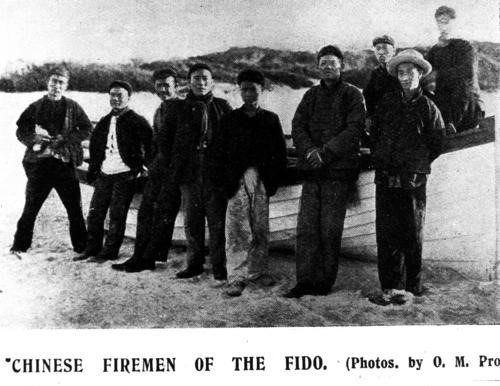
Chinese Sailors

That office is in Kwong Alley, almost certainly named for all the Chinese market gardeners who were in the area until the 1940s, but the MUA might also remember that at one stage there were hundreds of Chinese seamen working in Fremantle even during the White Australia period. The story of people like Boon Juat Lee deserve to be better known. https://www.sbs.com.au/language/english/unwanted-australians-boon-juat-lee

Right now in Fremantle, though, all that is hard to imagine because, as elsewhere, the place is like a ghost town. Ironically, there are now vastly greater numbers of people on the beaches and the bike/walking trails, apparently safe in their view that social distancing does not there apply .

Like everyone else, then, some of my escape has been binge-watching, except that oddly enough my programs of choice have also turned out to be questions of governance and “the system”.
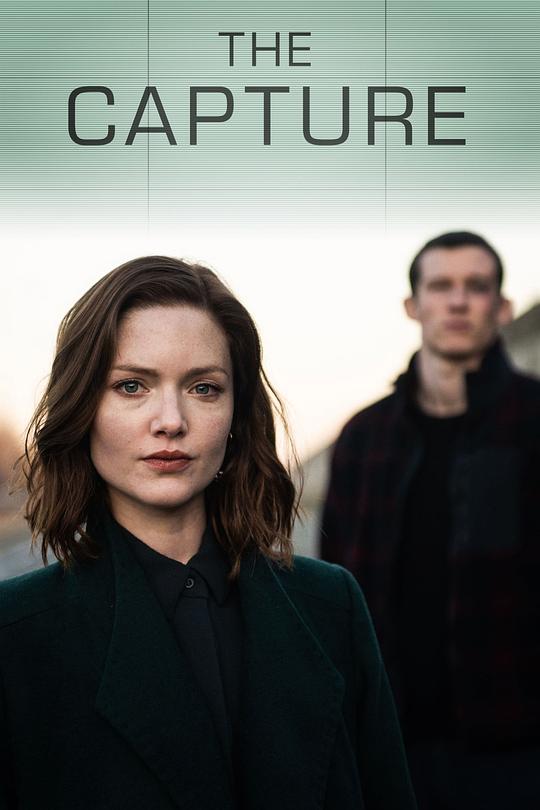
Capture

The Capture is one of the best things I have seen for a while, and at least one critic thought the same. https://www.redbrick.me/review-the-capture/ A British soldier is under investigation for war crimes allegedly committed in Afghanistan with video from a helmet camera as the main evidence. Cleared on that following legal argument about the accuracy of the tape, he is then embroiled in a murder case where video evidence clearly suggests he is the perpetrator. The cop in charge of the case has her own problems but gradually believes the soldier to have been framed, and gets drawn into the world of video surveillance and manipulation.

It is written by Ben Chanan, one of those multi-talented writer/director/documentary maker whizzes whose earlier work included The Missing and makes it all look deceptively easy. His key trick is to take an unbelievable idea and make it believable, writing magic. There has been just one season of this so far and no firm word of a second, but do have a look.

Then there is Deep State.
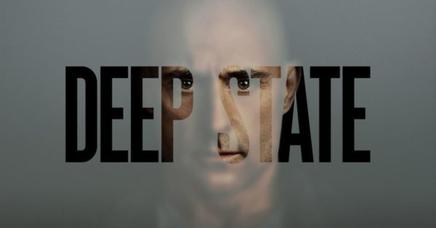
Deep State

The first season of this is very good. A retired British intelligence operative is reactivated out of his family and marriage in France to end up in Iran with his estranged son from a first marriage. Before going, he makes a tape to give himself some insurance, recording his part in some earlier skulduggery. It then all gets very complicated.

The second season is less convincing, focussed on the son who is now a private contractor caught up in the African badlands of official intelligence and its interactions with private contractors whose aim is making more money.

At the heart of all this is corruption in the system and the futility of the political process which is thwarted at every turn by the objectives of big business. The President of the United States goes through all this unnamed, but there is a reference to a President who “tweets like a teenaged girl”.

There are a few writers here, led by Matthew Parkhill who is another of the writer/producer/showrunner/novelist brigade (he is also married to Rachel Shelley who starred in Lagaan, one of my favourite Indian films). Steve Thompson (Sherlock), Simon Maxwell (American Odyssey), Chris Dunlop (Jericho) and Joshua St Johnson (Grantchester) wrote other episodes.

What have I been reading?

Paul M. Cobb’s The Race for Paradise is set as an Islamic history of the Crusades and has some intriguing sections, but I still prefer Amin Malouf’s The Crusades Through Arab Eyes.

Jennifer Egan’s A Visit from the Goon Squad is set in the LA music world, a madcap different “point of view” unravelling of the story in which an ageing agent struggles to meet the future while hanging on to the past.

Pascal Garnier’s Gallic Noir is a collection of his short novels, a refreshing reminder of the older schools of crime fiction where the story meanders rather than careers, and the stakes are not always high.

Lawrence Block I was lucky enough to meet a few years ago, one of the godfathers of American crime fiction and much more. Small Town is his “New York” novel with all the colour and movement New York had – it is sobering to think just how different it is now.

Diane Williams is acknowledged as one of America’s finest short story writers and her Collected Stories frequently but not always indicate why.

Mohsin Hamid’s Exit West is a refugee story about a couple escaping from the Middle East and gradually becoming estranged. The prose is spellbinding but the story less so.

After all, story is what it is all about, and I have been writing, screenplays.

Kirsten Unicorn

We await the new normal, and reading Adam Tooze is good preparation.

The Cruise Effect

Fremantle PortFor the past few weeks Fremantle, our “other home” and the port city for Perth in Western Australia, has been central to a global debate on the role played by cruise ships in the spread of COVID-19. Put simply, as Indian Ocean, Asian and other ports closed up, Fremantle became a natural destination. Within days of the pandemic being declared, ships from several lines turned up. https://fremantleshippingnews.com.au/shipping-news/

Now, during recent years Sandi and I have spent a fair time on such ships where I have been a fortunately invited lecturer, a wonderful experience. Just one of the benefits is a range of now firm friends met during the course of those lectures. Another is the vast range of fascinating people met including senior military and intelligence figures, judges on international tribunals, successful businesspeople and academics, philanthropists and all the rest. On our very first voyage, my final lectures into Capetown were cancelled to make way for… Archbishop Desmond Tutu.

That ship was commanded by Captain Jonathan Mercer. Ironically, it concluded its most recent journey at Fremantle, again commanded by Captain Mercer on his last hurrah. It began as a round-the-world voyage but is now heading towards South Africa en route home, almost all of its passengers having been flown out of Perth.

For a terrific sense of the cruising world and what has been happening, check Captain Mercer’s fascinating blog in which he particularly mentions that Fremantle stop. http://captainjonathan.com/fremantle-and-the-end-of-the-world/ He is too much the diplomat to mention all the wider drama, not so much with his ship as with those others that hove into Fremantle with confirmed cases of COVID-19 aboard.

Principal among those is the Artania, now central to a diplomatic and political as well as public health storm.

Briefly, WA Premier Mark McGowan had initiated tough anti-virus measures and was alarmed by the prospect of these ships disgorging passengers among the general populace.

Ruby in Sydney
That was understandable, given the developing fiasco around Sydney’s Ruby Princess story where local health officials allowed about 2,700 passengers out into the general populace even though COVID-19 had been identified aboard. That so far has led to 440 identified cases and five deaths across Australia. https://www.news.com.au/travel/travel-updates/health-safety/coronavirus-ruby-princess-mistake-caused-infection-cases-to-explode/news-story/c79dcc2c83704d53b6ecd8e5b0ce7e59

[Note – some links may have paywalls]

So McGowan declared bluntly that Artania, in particular, would not be allowed to land, even though public knowledge had it that there were some very sick people aboard. https://thewest.com.au/news/coronavirus/coronavirus-crisis-mv-artania-msc-magnifica-and-vasco-de-gama-everything-you-need-to-know-about-was-troubled-ships-ng-b881499462z

McGowan’s navy lawyer background before becoming a politician made this stand puzzling – maritime law and lore alike prizes life and safety at sea, as does common humanitarian principle. He seemed scarcely likely to win that one. Sure enough, the ship did dock, the sick went to hospital, as many others as possible were convoyed in exclusion to the airport and put on three planes back to Germany chartered by the cruise company.

But that was not the end of it. Some passengers remained and so did the crew, many of whom were now displaying signs of the illness. The nature of general and cabin crew staff on cruise lines is a major subject in itself, but suffice to say that for a very long time most have come from places like Indonesia and the Philippines, for a host of complex reasons. (this link is a little old but gives the background) – https://www.tipsfortravellers.com/revealing-the-secret-behind-the-crew-composition-on-holland-america-line/

As a sidebar, one major knock-on effect of what is happening now is the severe economic and financial jolt those countries will feel as a result of the disruption in cruise activity.

So, McGowan was again adamant the Artania must leave and there were wild reports about Border Force being ordered to get the ship out, that the navy would get involved and so on. https://thewest.com.au/news/coronavirus/coronavirus-crisis-wa-premier-mark-mcgowan-wants-covid-19-hit-cruise-ship-artania-gone-ng-b881507578z

Kapitän-Morten-Hansen
A vigorous behind the scenes negotiation was made all the more interesting by the presence of Captain Mercer’s Artania counterpart, Captain Morten Hansen. It turned out he has 30,000 Facebook followers, courtesy of his starring role in a European reality television show focused on the cruise industry. https://www.facebook.com/Kapitän-Morten-Hansen-Fanseite-178359965533287/

The West Australian, the state’s rag of no other choice, thought this “Bizarre”, to quote the header: https://thewest.com.au/news/coronavirus/coronavirus-crisis-artania-cruise-ship-captain-morten-hansens-bizarre-background-revealed-ng-b881506884z

At the time of writing, the Artania is still at dock a few hundred metres away, according to my Marine Traffic app, and still carrying the signs of gratitude hoisted by passengers and crew, obviously not directed at the Premier.

Artania thanks

We might note here that Australia has long had a problem with ships, especially those coming from Asia. Back in 1880, for example, as the first planks were laid in what at Federation became the White Australia policy, ships were restricted to bringing in one Chinese person per 500 tons of gross tonnage. And those ships were not of the 45,000 tonnes type that is the Artania.

At the same time, Australian authorities were incensed to discover that, apparently, the British in Hong Kong had been exporting criminals quietly by putting them on ships to Australia! That, of course, was how Australia was founded in the first place. https://trove.nla.gov.au/newspaper/article/900945?searchTerm=Chinese%20banned%20from%20landing%20in%20Australia&searchLimits=sortby=dateAsc|||l-category=Article|||l-decade=188 A hundred or so years later, Australia began turning back the refugee boats and that remains the policy now on both major sides of politics in the country.

Zaandam and Rotterdam
Across the world from the Artania, however, an even bigger standoff was developing.

A couple of days before the pandemic was declared, the Zaandam set off on a cruise from Buenos Aires that was to finish in Chile a couple of weeks later. But COVID-19 appeared on the ship. The pandemic now declared, several cities closed their ports and the ship had to head for home, Fort Lauderdale in Florida. News reports appeared of people onboard having died from the virus and with others sick.

The Zaandam was met off Panama by sister ship, the Rotterdam (on which Sandi and I have been) that had sailed from San Diego with extra medical staff and supplies and no passengers. Large number of passengers were then transferred to the Rotterdam by tender – that means the ships lifeboats being used to transport passengers, as often happens at ports where the ships are too big to dock. https://edition.cnn.com/2020/04/01/us/holland-america-zaandam-cruise-ship-florida/index.html

Zaandam tender
This is the point at which those who have experienced cruising will start to appreciate the tension on board. Several planned itinerary stops have been cancelled, news spreads that sickness has emerged and, importantly, it is unclear what might happen next. For several days, this had been and remained the state of play on board. Rumours spread. People are confined to cabins – and on these ships an “inside” cabin is cheaper, but it means no windows. So being confined takes on an extra dimension. Friends and family are calling in wherever possible, the internet conveys messages, more theories appear. Then a large transfer of passengers takes place. The mood on board can be imagined. https://www.washingtonpost.com/lifestyle/style/the-holiday-of-a-lifetime-an-oral-history-of-the-infected-rejected-zaandam-cruise-ship/2020/04/02/958c2288-7491-11ea-87da-77a8136c1a6d_story.html

The view developed on board, it appears, that “sick” and “healthy” ships were being established and that, clearly, upset a lot of passengers. That was effectively the reason the President of the line made a videoed statement into both ships to explain exactly what was going on and why. https://www.facebook.com/watch/?v=586897791900229&external_log_id=863dd1ebb3ceabed6a4c11954ae727e3&q=holland%20america%20zaandam

Both ships were eventually cleared to transit the Panama Canal, at which time those in charge faced another emerging problem.

Like Premier Mark McGowan in Western Australia, Governor Ron DeSantis of Florida had also been a navy lawyer officer, in the US Judge Advocate General (JAG) Corps, and had been deployed to Iraq. And like McGowan, he did not want these ships in Florida. https://www.businessinsider.com.au/holland-american-coronavirus-covid-19-zaandam-rotterdam-2020-3

But also like McGowan, DeSantis had to allow the ships to dock (on 2 April) and for the same humanitarian reasons as allowed for by his fellow Republican, President Donald Trump. http://www.sun-sentinel.com/opinion/editorials/fl-op-edit-zaandam-cuise-ship-20200401-3cmfs42c4zep7d6rkux4utfqbi-story.html?fbclid=IwAR23f2Qyp0-37IA90o9kSfcSDek5DlNJmeYjLH008ZcEAFAQEQw1sz6PWaI

Both episodes demonstrate the resurgent localism that has emerged in wake of COVID-19, what some see as a retreat from globalism.

Hard Border

As those ships reached Fort Lauderdale, for example, McGowan was turning Western Australia into an “island within an island”, as he terms it, with a “hard border” being declared against (and I use that word deliberately) the rest of Australia. https://thewest.com.au/news/coronavirus/coronavirus-crisis-premier-mark-mcgowan-announces-hard-border-closure-for-wa-ng-b881508092z It is not that long ago that a “hard border” in Ireland was the pivotal matter in BREXIT.

By the time the two ships did dock in Florida despite DeSantis’s original view, their parent company was displaying the bigger consequences in all this, remembering that these were not the only ships facing trouble around the world. https://edition.cnn.com/travel/article/cruise-ships-still-sailing/index.html

Carnival Corporation controls at least half of the global cruise line business, operating under several flags. https://www.carnivalcorp.com/ Obviously, the need to stop cruising has enormous financial consequences, and that was signalled by the corporation’s need to raise $US6 billion in additional funding. At a rough operating cost of $1 billion per month, that allows six months for things to turn right under the current arrangements. https://www.marketwatch.com/story/carnival-corp-secures-rescue-financing-package-on-wednesday-to-help-the-embattled-cruise-ship-operator-navigate-choppy-waters-in-the-months-ahead-2020-04-01

At this point, though, “turning right” will almost certainly involve major change, and in that sense the cruise industry becomes something of a touchstone for the world as a whole when it comes to what happens next. Change is inevitable.

Traditional long distance cruising demographics, for example, coincide with the groups most vulnerable to COVID-19, the over-60s and especially the over-70s. After all this, that demographic might be a bit reluctant to sail as much if at all and, in all truth, most if not all cruise lines had been trying to diversify away from a reliance on that demographic anyway.

Venice Ships
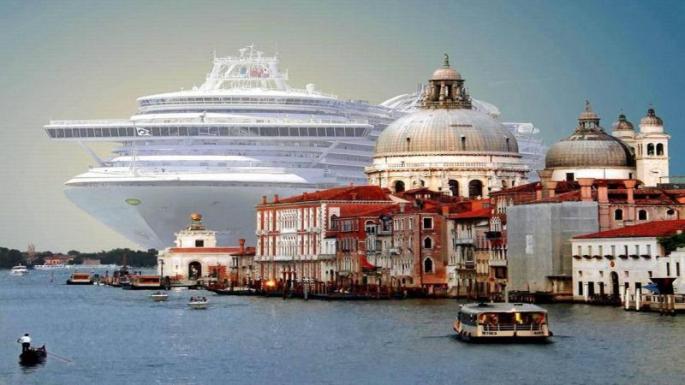
Then, how many ports and cities will reopen to this travel anyway? And that goes for the tourism industry as a whole. Before this, places like Venice and Amsterdam had already begun shutting out big cruise ships, and they are now likely to be joined by others. https://www.malaymail.com/news/life/2019/08/02/venice-calls-european-port-cities-to-arms-over-cruise-ships/1776848

Another isolation effect is to turn us medieval. Back then, villagers scarcely ventured outside a ten to fifteen mile radius ever in their lifetime. It feels a lot like that now, and if the isolation against COVID-19 continues for several months, some of those effects will likely continue.

And if we do want to cruise, how do we get to ports of departure unless, like us, the terminal is just up the road? Who will fly us there? Virgin Australia needs a massive Government bailout to survive, and Air New Zealand has signalled it will be a domestic carrier only for some time to come. https://australianaviation.com.au/2020/03/breaking-air-new-zealand-reduces-long-haul-capacity-85/

Will the confidence to travel return? In some, like the young, of course, but while some tourism experts confidently expect a big bounce back, others reckon it will take the mass tourism of recent times a long time to return. https://www.eturbonews.com/542449/coronavirus-is-the-travel-tourism-industry-lost/

For Carnival, some of its flags might well disappear. Even if they do not, the business will change and, like everything else at present, it is not immediately clear what that change will look like.

But for the moment, the Artania still sits up the road here in Fremantle with more crew COVID-19 sufferers being taken off, a symbol of the havoc wrought upon us by this virus that will go down as one of those significant historical agents of change.

The Black Death And Now

In a recent and wonderful Times Literary Supplement piece, the prolific English writer and long-time Italian resident, Tim Parks, added Boccaccio (of Decameron fame) and Giovanni Villani (the fourteenth century Florence banker and chronicler) as Black Death diarists whose notes bear current relevance. https://www.the-tls.co.uk/articles/milan-coronavirus-italy-tim-parks-essay/

(If you love Italy you must read Tim Parks: Italian Neighbours; An Italian Education; Italian Ways; and my special favourite A Season With Verona).

Like many others, I had started with Daniel Defoe’s Journal of the Plague Year that recorded the English effects, but as Tim Parks rightly reminds us, the Black Death changed lives throughout the-then known world, and the themes of that time resonate now.

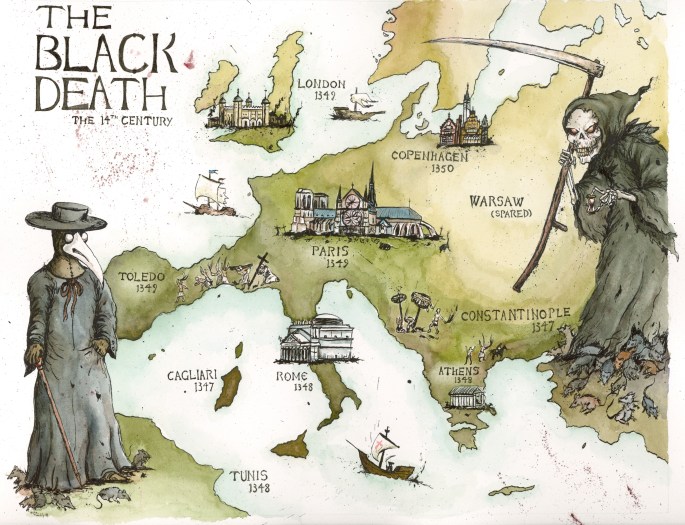
The Black Death: The 14th Century
A map of the progress of the bubonic plague in Europe during the 14th Century AD. Watercolor and ink.

It is widely accepted, for example, that the plague “arrived” in Europe at Messina, in Sicily, on twelve trading ships come from the Black Sea in October 1347. Many of the seaman were already dead, exhibiting all the terrible signs of what became known as the Black Death. From there the “pestilence” spread throughout Europe killing millions, decimating towns like Florence.

Sitting here now in Fremantle, Western Australia, nearly seven hundred years later, the helicopter noise I hear is sparked by the presence of some modern cruise ships that have become the successors of the dozen that reached Messina. https://www.abc.net.au/news/2020-03-28/cruise-ships-present-a-perfect-coronavirus-storm-of-problems/12093768

Artania

The culprit de jour is the Artania which, my MarineTraffic app tells me, is a 44,000 tonne ship built way back in 1984 (thank you, George Orwell), 230 metres long and registered in the Bahamas.

But the “Grand Lady” or the Queen of the Line in some descriptions, is even more interesting than that. She was launched in 1984 by Princess Diana and named, appropriately, Royal Princess as part of the Princess Line fleet in which she sailed until 2005 when transferred to P&O. In 2011 she was sold and then chartered by the Phoenix Reisen travel conglomerate and shipping line in Germany. Artania carries about 1200 passengers and almost 600 crew.

Back in December 2019 she left Hamburg on a 140 day round-the-world trip down the West African coast then out into the Indian Ocean, across to Southeast Asia, down the Australian East Coast, onto New Zealand then across to South America, up to the Caribbean, the USA and Canada before heading home to Germany. That cruise was due to end this May and for many aboard, would have been the trip of a lifetime.

But that timeline put it right across the trajectory of COVID-19.
Inevitably, its journey was altered. According to some passenger accounts, at least, that had started in Singapore and Indonesia by February 2020. https://www.translatetheweb.com/?from=de&to=en&ref=SERP&dl=en&rr=UC&a=https%3a%2f%2fwww.schiffe-und-kreuzfahrten.de%2fnews%2fcoronavirus-ms-artania-auf-abwegen-in-asien-waehrend-ihrer-weltreise%2f198473%2f  Ports were closing daily because of the virus threat, so the ship made for Australia, where things were also getting grim. On March 14 the company cancelled the cruise and Artania was set for a non-stop “crossing” to Bremerhaven, with any passengers not wanting to do that to be flown home to from Sydney.

Then came the Ruby Princess incident in Sydney where passengers who had returned positive COVID-19 tests were somehow allowed to wander off at large, setting off a major chain reaction.

Ruby Princess

The Princess line, of which Artania was once part, already had a troubled role in this global panic. During February, when Artania was around Singapore, the Diamond Princess was stuck in Japan with multiple COVID-19 cases and a major challenge on how to proceed. https://www.theguardian.com/global-development/2020/mar/06/inside-the-cruise-ship-that-became-a-coronavirus-breeding-ground-diamond-princess

This resonated especially in Perth, Western Australia – James Kwan, the state’s and Australia’s first COVID-19 fatality, on 1 March 2020, was a well-known local tourism figure, and had been evacuated from the Diamond Princess. Since then, cruise ships had figured prominently in dispatches.

That demonisation was understandable, but not necessarily logical. The argument was that hundreds and thousands of people were cocooned on these ships that became, in popular parlance, “petri dishes” for the virus. That is true to an extent. But the New Zealand story here is interesting – health authorities there publish details of all positive cases, and a huge percentage are directly connected with air travel. https://www.stuff.co.nz/national/health/coronavirus/120577713/coronavirus-66-south-island-covid19-cases-confirmed

Ships are much easier to demonise than aeroplanes, it seems – although both now face troubled futures. https://vancouversun.com/news/local-news/covid-19-puts-travel-industry-in-a-perfect-storm-of-chaos/

Like those Messina ships, Artania was a pariah by the time it arrived off Fremantle, rumoured to have up to seventy COVID-19 cases aboard. WA Premier Mark McGowan (a former navy lawyer) argued trenchantly that the ship was a Federal responsibility so the sick should be taken care of in defence facilities and the rest not allowed to land. https://www.perthnow.com.au/news/coronavirus/coronavirus-crisis-wa-premier-mark-mcgowans-solution-for-covid-19-cruise-passengers-off-fremantle-ng-b881500431z The local Australian Medical Association branch was already concerned at the state’s lack of pandemic preparedness and considered Artania’s arrival as a looming disaster.

That was reinforced by the arrival of the Magnifica with more COVID-19 cases, the imminent arrival of the Vasco de Gama (most of whose passengers will now quarantine for fourteen days on the local tourist island of Rottnest, named originally Rats Nest in 1696 by Dutch explorer Willem de Vlamingh who failed to identify the marsupial quokka) and recent visits from other diverted cruises.

Quokka

While the Premier had eventually to compromise, Twitter and Facebook commentators went way further: “send them packing, back where they belong” and worse, far worse, characterised the public response. Just the odd humanitarian voice thought the sick needed care.

That was a direct offshoot of the now-well known pandemic panic that saw supermarket shelves stripped of toilet paper and hardware stores of generators and methylated spirits. https://thewest.com.au/news/coronavirus/coronavirus-crisis-panic-buying-chaos-as-wa-shoppers-turn-violent-ng-b881489862z

As with the Black Death, it was everyone for themselves.

And this was just three or four weeks after local opinion had been that more cruise ships operating out of Fremantle as a result of port disruptions like those suffered by Artania would be a great boost to a fragile state economy.

This was another demonstration of just how rapidly COVID-19 was reframing daily life and, as at Messina, what had seemed like a good thing was now decidedly something else.

The Fremantle story also saw the continuation of another theme present in Messina.
Many if not most Black Death accounts laid responsibility for the origins of the disease with “Asia”. More recent accounts place its rise around 1320 in the Kyrgystan/Mongolia region. The spread was then said to be through China and India and on into Europe.

Trump China

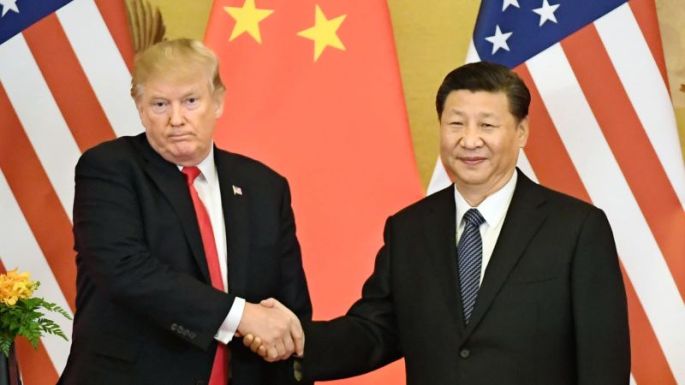
It is readily apparent that the current slanging match led by President Trump blames China for the rise of COVID-19. https://slate.com/news-and-politics/2020/03/trump-calling-coronavirus-chinese-virus.html That rhetoric further excoriates China for then having the temerity to offer assistance to subsequently afflicted countries.

Much conservative Australian commentary mimics this. Organisations like the Australian Strategic Policy Institute – that claims to be “independent and non-partisan” (but was set up by a John Howard conservative government and remains part-funded by the Department of Defence) – serves up a constant China-bashing line, as in this from its Director: http://www.aspi.org.au/opinion/letting-beijing-bully-know-our-neighbourhood ASPI staff figure prominently in the The Australian that has adopted an aggressively anti-Chinese stance on just about everything – an ex-Australian journalist produced this on the virus: https://www.news.com.au/world/asia/how-chinese-president-xi-jinping-failed-to-manage-the-coronavirus-outbreak/news-story/1a06e142ed15bf4124a95b1c3f4533e7

Now, this present viral strain did appear first in Wuhan, and China originally did struggle to deal with it and now seems to be in control – even if critics like Fernando argue that we cannot trust the data coming from China. That suggests we can trust the data coming from the United States or from Australia for that matter, and many of us would hesitate to go that far.

Right now, as with so many international matters, focus should be on cure rather than cause, and on the ways in which a global community can collaborate to combat this problem, not to mention the rapidly escalating financial and economic one which is following.

It is useful here to caution against immediate attribution of blame, as the Black Death case again indicates.

Almost every European account of that catastrophe suggests, as noted earlier, that China and India “were to blame”. Yet as Laksmikanthan Anandavalli pointed out a few years ago (in one lovely essay among several others on plague in Tangents), there is a problem here. No major account of India at that time (including the great work by that inveterate Arab traveller, Ibn Battutah) details anything like the Black Death. Yes, there were outbreaks of pestilence – but none exhibited the tell-tale symptoms of that scourge. https://mla.stanford.edu/sites/g/files/sbiybj1421/f/tangents07.pdf

What this points to, of course, is the way in which assertions transform into accepted fact, and the need to revisit those assertions – and we are all guilty of the first at some point, and delinquent on the second too often! (Everyone who has got to this point will now go off factchecking, so apologies in advance for any discrepancies.)

The Black Death changed the-then known world for generations, and signs are this present “pestilence” will do the same. Cruise ships and airlines are under immense financial pressure, the tourism industry will likely change dramatically. It was already challenged, with cruise ships shut out of places like Amsterdam and Venice (which suffered so massively back in the fourteenth century).

Our borders will not be so open again for a very long time. We may see limits on essential services goods last longer than we think. Many banks are reluctant to accept actual cash, hastening electronic commerce that will lead to further social inequality. As universities and learning institutions go fully online, will we ever get students back into lecture halls and classrooms? Will we ever again work in large open-plan environments, or even in the same building? Perhaps we will be the twenty first century version of The Lonely Crowd? https://university-discoveries.com/“the-lonely-crowd”

But to return to Tim Parks – the other important question may well be who becomes the great chronicler of all this, someone from whom the future might learn as we learn from Boccaccio and Ibn Battutah, Defoe and Villani? Who will chronicle the modern plague ships? It is a fascinating story.

Another Plague year

While historiographically speaking I sit more in the “longue durée” than the “defining moment” camp, right now it seems that 14 March 2020 might in future be regarded as the day the world changed.

And that, of course, was because of COVID-19 on which every Facebook, Insta, TikTok, Snapchat, WeChat, WhatsApp et.al. pundit has become expert.

What happened?
• Just about every sporting event in the world was suspended for the foreseeable future.
• New Zealand Prime Minister Jacinda Ardern shut her country’s borders to help maintain its reputation as the last outpost of civilisation.
• Most cruise ships were heading for their nearest ports (if they could get in) and to go no further.
• Airlines slashed flights and prices and tried to make their destinations attractive.
• The tourism industry worldwide took a pounding.
• Australia cemented gold medal status as the globe’s greatest toilet paper hoarder.
• Italians sang from their balconies in a show of national unity rarely seen.
• China sent supplies to assist the overloaded Italian medical system.
• The United States added the United Kingdom to its list of banned source countries.
• “Social distancing” became a dinner party subject, where dinner parties were held.
• Already shaky economies, like Australia’s, began to wobble.
• National leaderships came under severe scrutiny.
• Citizens everywhere began re-examining their lives.

Places around the world began re-examining their futures:

https://odishatv.in/odisha/ab-tak-60-countries-will-covid-19-change-fate-of-the-world-437900

Seabourn

As 14 March began, for example, I faced a possible balancing act. With a Kiwi colleague, I was due to head to Noosa for a Wellness Summit in connection with a project on which I am assisting. The wisdom of that trip was already in doubt, then came Jacinda’s announcement. If my pal came to Australia, he would have to self-isolate for two weeks upon his return and that was not practical.

That was off, then, to create another possibility. On the following weekend Sandi and I were now scheduled to join a cruise ship in Fremantle, and I would lecture on board across to Tasmania. That ship had already been diverted away from its scheduled Asian ports towards Australia and…New Zealand.

I had been asked if I might join the ship in Broome up in the northwest. Originally, I couldn’t because of the Wellness Summit but that now cancelled… I could join the ship in Broome on Monday. So I sent that possibility off to the agent.

Then I went off to dinner with friends (Sandi was in Adelaide) where the virus was front and centre – including a Facetime chat with a friend resident in Italy who was walking around isolated city streets. On the way home, yet another Aussie resident in Italy was radio interviewed about how much her life had changed.

I got home to emails saying that going to Broome was not necessary. In fact, the ship would come into Fremantle and end its voyage there. My services would not be needed, and no new cruises would start for at least thirty days.

My diary was suddenly cleared and I was free, to do…what?

Prisma

One of my screenplays has just been made “Official Selection” at a competition in Rome. Maybe I could go to a movie and watch how it is really done. But who else would be there, and could I “social distance”?

The same might be said of going out for breakfast, to a bookshop, an antique outlet, a gallery, live music, a play. There’s no sport to go to, or watch on TV, live at least.
On Monday, the college I work with in Sydney will start delivering all classes “remotely”, that is by way of video. The unions have fought this for years, but the virus has forced the issue and with that particular genie having now escaped the bottle, will we ever get it back inside and capped? Very likely not.
https://www.channelnewsasia.com/news/singapore/online-learning-platforms-see-increased-demand-amidst-covid-19-12488726

Those at dinner focused on the idea of meetings. Most are now to be run remotely – our college ones will be from this week. There are ramifications here. Some cultures do not find that method acceptable, it has to be face-to-face. How will that be navigated? And will students now take the remote instruction as the norm? There have been question marks over lectures for years, this will likely be the tipping point.
https://www.thoughtco.com/lecture-pros-and-cons-8037

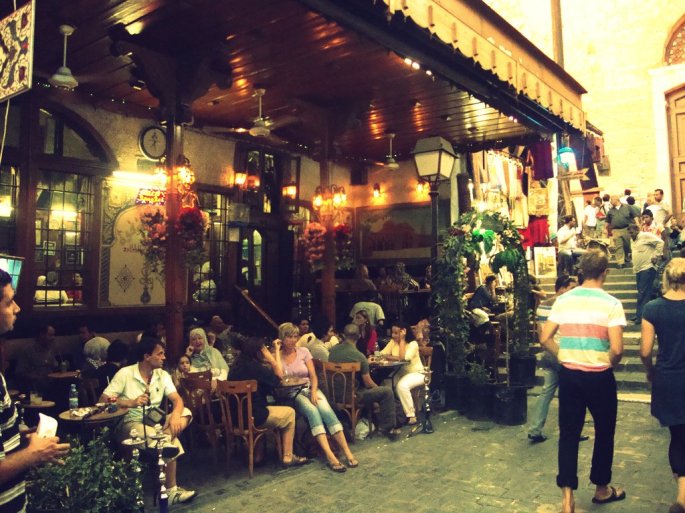
There is a potential way of life change here, or maybe a “Back to the Future” moment. We live in Fremantle where the lifestyle is mainly coffee shop, pub, restaurant. That is to say, it is the pretty typically urban public culture that has become almost global. Istanbul is like Fremantle and Sydney, London, New York and all that. The Saudis might be a bit different, say, but that “coffee house” culture has been with us for three hundred years and more.

Damascus Coffee
Perhaps less so from now on. There is a lovely Facebook note reminding knitters, sewers and quilters that “this” is what they have been training for! Activity in solitude. There suddenly seems to be more time for reading, too, if we can afford to buy books in whatever form because in many ways this is the capitalist world’s equivalent of colony collapse.

Jacinda Ardern’s message was reported in one outlet as “Jacinda Shuts Down Queenstown Tourism”. When I asked my New Zealand brother about some of the practicalities concerning the new measures, his reply was shrewd as always: the aim really was to stop people coming in, not to manage them through self-isolation.

Qtown jetboat

That will hammer an already staggering economy. Year-on-year reports already had this summer tourist season as a poor if not dreadful one, and that was before the virus shut the doors completely. Businesses will fail, incomes will disappear, lives will change.
And the same is true in Australia. While the Government spruiks the idea that the virus has eroded the economy, people have for months been whispering the “recession” word, and that was underlined by the stock market route of the past week. There is another tipping point a la 2008.

The Australian economy rests on minerals, tourism and education: iron ore, coal, travel and students. The last two are being smashed by this meeting of economic slowdown and virus. My Perth brother tells me the first two are also slowing noticeably because the two week quarantine period plays havoc with cargo shipping logistics. That is then additionally aided and abetted by the belligerent approach to China adopted by the Government and propagated by a mendicant media. That all helped transform the virus campaign into a racist one focused on the “Chinese disease”.

China warns Australia
As in America, the leadership approach to all this has been found wanting, really. In the education field, for example, some authorities have chosen to be more concerned about the immediate financial hit and implications than about the health and welfare of students, staff and the public. That is simply unsustainable and points to yet another change in public sentiment that will be required once the dust settles on this, if it does settle.
More disruption than settlement is likely in industries across the board. My inbox today carried an impassioned plea for support from the director of a small professional theatre in Sydney. It is threatened already, thanks partly to a mad situation in which not one Australian playwright is being funded by the Australian Arts Council through the next four years.
https://www.smh.com.au/entertainment/theatre/funding-catastrophe-hits-playwrights-20190819-p52imy.html

Then, Tom Hanks’ Gold Coast experience is not helpful. Cast and crew will not travel to Australia (or New Zealand) from anywhere else under the present circumstances. Joint productions across countries will be almost impossible to mobilise – my “Official Selection” screenplay needs such an Australia-France collaboration.

Hanks

A friend has a feature film all set to drop, but no guarantee of a cinema in which to screen it. My film daughter in the UK (who with her partner is setting up a support service for the self-isolated elderly in their local community) reports that productions there have slowed to a trickle almost overnight – who will fund anything that might not ever see the inside of a theatre, or the faces of an audience for that matter?
https://www.screendaily.com/news/uk-film-sector-scrambles-to-respond-to-the-coronavirus-crisis/5148114.article

Australia China Pacific

And in a totally different realm, how will the international aid and development industry navigate all this? It is the ultimate cross-border, cross cultural operation with funds provided largely by now-under pressure Western economies for work to be conducted in less successful states. As another colleague points out, Australia’s recent and much vaunted aid push into the Pacific (in large part to counterbalance the massive Chinese presence there) will struggle to survive aggressive budget raids to fund the anti-virus campaign.

And even if it does, then operatives on the ground will struggle to reach sites (he tells me that at present in Mongolia, where I worked on a project last year, there are no flights at all in or out of Ulaan Baatar, the capital). How will the work be done?
https://en.trend.az/business/transport/3205217.html

Defoe

No wonder, then, that there has been a widespread rediscovery of Daniel Defoe’s almost four hundred years old A Journal of the Plague Year. We need all the lessons learned we can from that piece of history.

There is much more to come.

Another World

We have just returned from yet another trip to India, a country that continues simultaneously to delight, confuse, entertain and alarm.

In Bombay (as locals still have it), we met up with American and Australian friends. That was a complete surprise for one of them celebrating a “biggish” birthday and starting with a bang, because Diwali fell the day after we arrived.

_D8A3691
The festival of lights reaffirms the triumph of good over evil, light over darkness and is typically marked by firecrackers and lanterns. This year, though, it seemed more muted than usual.

All the markets were busy as ever, the fabric markets in full swing and big throngs outside the fireworks shops.

_D8A3633

But when we all trooped over to Marine Parade and Nariman Point, it was all a bit sedate. The crowds were no bigger than for an average weekend night, and relatively few of the residential buildings along one of the world’s most expensive property stretches carried the traditional Diwali lights. There were numbers of people out, of course – this was India, after all. But it was not massive.

Taxi drivers all suggested their business was slow because consumer confidence was subdued. That became a theme over the next three weeks – despite all the razzmatazz, Prime Minister Narendra Modi’s Indian economy is slowing, and mumblings are mounting. https://www.theglobaleconomy.com/India/business_confidence_survey/

But Bombay was its usual wonderful self and our friends discovered the riches of fabric store, Fabindia, that began almost sixty years ago as a means to preserve traditional weaving and has grown into a massive and colourful shopping venue. In fact, at every subsequent destination Fabindia became a target. https://www.fabindia.com/?utm_source=bing&utm_medium=cpc&utm_campaign=AU_FabIndia&msclkid=eed11258d9c81b2b46c54f8f808ae2bf

Bombay is massive – Maximum City, as Sukhetu Mehta’s excellent book identifies it – but it works well enough. The architecture is remarkable, the energy palpable. And then there is Bollywood, so it was instructive to see our friends come to realise the power of film there and the stature of stars like Amitabh Bachan.

On the plane up I had watched Thugs of Hindostan and enjoyed it thoroughly despite its OTT trajectory, and was surprised that it had “bombed” so spectacularly. A Bollywood friend’s explanation was simple – Indian audiences had already seen Pirates of the Caribbean!

That was just another indicator of how India is becoming mainstreamed into the global economy. Netflix is now doing joint productions and Indian actors are appearing outside India more frequently. Watch this space as the Indian and Chinese film industries both become more globally significant.

And I still think Thugs is a great hoot.

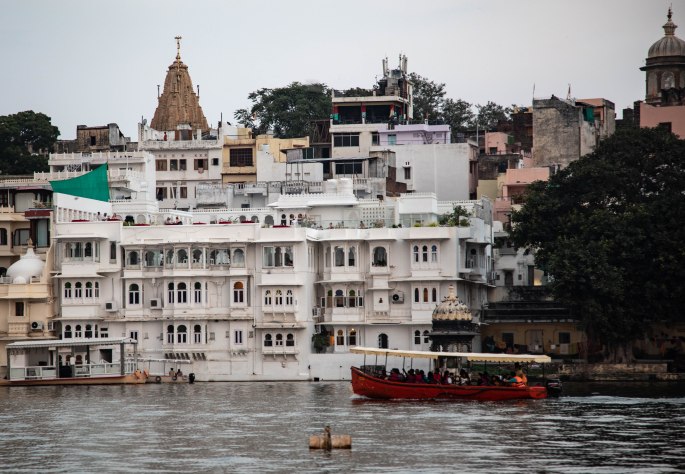
From there it was on to Udaipur that remains one of my favourite places, improved as ever by staying somewhere like the Jagat Niwas Place, overlooking Lake Pichola and the fabled “Lake Palace”. http://jagatcollection.com/

_D8A4052
The power was switched off every time we left the room and the hot water was finite, but the service was fabulous and the views terrific, especially from the roof at sunset with a Kingfisher beer in hand.

_D8A3932
Getting to the hotel was an adventure for our friends. A van met us at the airport and navigated the almost forty kilometres of roadwork into Udaipur, then transferred us and luggage into three tuktuks for a circuitous journey via the choked and narrow market lanes. It was all for effect – last time there Sandi and I went in by taxi – but great fun.

That night we all walked around to the other side of the lake and the Ambrai restaurant that sits on the water and serves excellent food. It was so good our friends insisted on returning on a subsequent evening. http://www.amethaveliudaipur.com/restaurant.html

Over extended bargaining (that included discussions of politics and life) I made new friends with a jeweller and a Kashmiri fabric trader. Both told me business was slow, and had been even over Diwali. Udaipur was crowded with tourists domestic and foreign, they said, but the Indians were not buying. The jeweller said that his shop was normally crammed over Diwali when he needed extra staff – this time round even his normal staff had little to do.

The next stop was Kochi in Kerala, currently my most favourite place in India.

_D8A4162

We included it on the itinerary to show our friends the great differences between north and south India – down here there are as many churches from a variety of denominations as there are temples and mosques. Like the famed Chinese fishing nets, these churches betray the region’s long affiliation with the trading routes pioneered by the Portuguese and followed up by Arabs, Chinese, the British, French and all the rest.

And these days Kerala has an added impulse.

If you’ve ever been to Doha, Abu Dhabi, Dubai and the rest, then there is a fair chance those Indian workers you encountered came from Kerala which has something like a 97% literacy rate. Those educational standards serve the state well. India annually takes in about $US 82 billion from Indians overseas. Almost half of that goes back to Kerala where those remittances represent 35% of the state’s GDP (India’s national average is only about 3%). http://www.keralainsider.com/foreign-remittance-and-economy-why-kerala-cannot-be-ignored/

That makes for some interesting social patterns. We stayed at the excellent Malabar House in old Kochi where the GM was born in Kerala but brought up in the UAE where he got into the hotel trade then returned to Kerala just a year ago to find the change of pace substantial. http://www.malabarhouse.com/

This is part of the new India and its global diaspora that propels Narendra Modi into those Rockstar excursions to performances in places like Madison Square Gardens and the Melbourne Cricket Ground.

My GM friend was finding business slow, too, but not just because of the economy. In his case, that was aggravated by climate change.

Last year the monsoon brought massive floods to the state. About 500 people died, a million were evacuated, and roads, railways, bridges and all the rest took massive damage that still remains. The roads into Kochi from the airport remain under reconstruction.
That monsoon season is normally June to September, but this year was late and extended well into October and November that hit the tourist industry hard as flights were cancelled, tour groups disrupted with participants opting to go elsewhere. So when we emerged from a Kathakali dance demonstration into pouring rain, it was no surprise.

_D8A4251

There were still people around, however, all attracting attention from tuktuk drivers who all receive “petrol vouchers” and (if sales eventuate) and commission from the mostly Kashmiri traders who run the tourist-oriented shops.
Those Kashmiris are another signifier of the new India. Some have been in Kerala for fifteen to twenty years, having fled their home state because of the disruption caused by the ongoing India-Pakistan conflict. Now they are incensed by Modi’s abolition of Kashmir’s “special” status guaranteed constitutionally in 1947. https://www.thehindu.com/news/national/kerala/its-anxious-moments-for-kashmiris-in-far-off-kochi/article28828196.ece

Kashmiri Hindus and Muslims alike are incensed India-wide, even in the south. The move is seen as yet another move in a creeping Hindu nationalist grab from Modi and his federal BJP government in wake of their crushing victory over the Congress party in the most recent elections.
Bombay had been interesting in that respect, too. State elections in Maharashtra delivered no majority party, with the BJP in a standoff over a possible coalition with the Shiv Sena, another Hindu nationalist group. That went unresolved and the state is currently under President’s Rule from New Delhi. https://www.opindia.com/2019/11/presidents-rule-imposed-in-maharashtra/
From Kochi we went an hour further south to Alleppy and the houseboats that have evolved from the riceboats that used to ply the Kerala backwaters and their 1,000 kilometres of navigable waterways hemmed between the hills and the Arabian Sea. This area has long been and remains one of the Indian rice bowls, but as newer means of transport evolved the boats that once carried rice now carry tourists who add significantly to those remittances sent home by expat Kerala workers.

We had all decided on having five full days on a boat, and our Indian “advisers” were unanimously agreed that was way too many – do just an overnight, they said, you’ll be bored rigid otherwise.
Wrong. None of us wanted to leave when that final morning arrived. The crew on Spice Routes boat Tamarind was fabulous.

_D8A5095

So was the food. Every day was different, the birdlife teemed, there were interesting moments – like stopping into a waterway shop and picking up giant prawns for dinner.

_D8A4574

There was always something to do or watch, and we were scared to switch attention off for fear of missing something. It was tranquil, photogenic and incredibly relaxing.

_D8A4885
But leave we did, with every intention of returning, and a highlight on that final day was a visit to a genuine handloom fabric store jammed full of locals, we were the only foreigners in sight. There were some traditional handloom weavers on site, displaying incredible skills that are in serious danger of being lost forever as India changes.

This was the India outside the modernised and modernising cities, and a reminder of just how different the place can be – we enjoyed all that as we relaxed for an afternoon at the Purity resort owned by Malabar House on the shores of Lake Vembanand. http://www.purityresort.com/

Everyone should try that sometime.

_D8A4411

Rotorua Noir

Several days on, a buzz remains from having been at Rotorua Noir, New Zealand’s first-ever crime fiction festival directed by Grant Nicol and Craig Sisterson. An immediate sense of community developed, as at similar festivals around the world. Even though crime fiction and thrillers now dominate the publishing market, their writers maintain a “united us” versus the literary fiction “them” who, by and large, consider us lesser beings.

Sussman the-last-time-we-spoke
That debate and, perhaps, the self-doubt never ends, even though crime novels now provide as much if not more “social commentary” than the so-called purer literary forms. Fiona Sussman’s Ngaio Marsh Award-winning The Last Time We Spoke, for example, deals with the effects of home invasion as powerfully as does Ian McEwan’s Saturday. In fact, Sussman may well have more impact, her story being about an ordinary family as opposed to what many critics regarded as McEwan’s impossibly upper middle class/elite “victims”.
Crime fiction now ranges far and wide geographically and covers all contemporary issues including illegal immigration, human trafficking, drugs, corporate corruption and the rest. Some even suggest that all literature is crime fiction, in that a “crime” of some kind invariably provides the “inciting incident”.
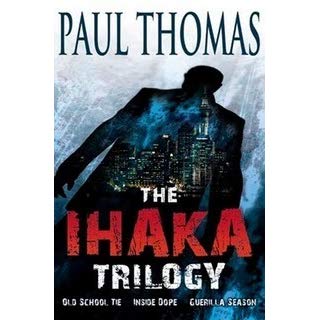
Then, crime fiction is as much about character formation and development as any other literary form – think how Michael Connolly’s Harry Bosch having been a Vietnam tunnel rat influences his cop career and behaviour. Ann Cleeves’ Vera Stanhope, similarly, has a background story that shapes her police career. Donna Leon’s Guido Brunetti, on the other hand, is the average everyday cop who gets on with his life, grumbling at the multiplying tourists who ravage his beloved Venice. In New Zealand, Paul Thomas’ Maori cop, Ihaka, struggles as much with his family’s social and political views as with Auckland crims.

Paul Thomas Ihaka
I thought of Ihaka a lot in Rotorua where the role of Maori in New Zealand society is far more evident than in the South Island, as it is generally across the North, the result of a complex post-European 1840 annexation. The “land wars” were in the north, and the full range of the Maori experience occurred there with an impact on language, custom and tradition. More recently, Treaty of Waitangi settlements have had far more impact there (with due deference to Ngai Tahu achievements in the South Island).

Nepia
This is not the place for a full discussion of the Maori trajectory fully, but it has been chequered. There have been highs: the Maori Battalion performance in numerous wars, and the achievements of people like Sir Peter Buck, Maui Pomare, Sir Apirana Ngata, Kiri Te Kanawa and Whetu Tirikatene-Sullivan. But there have been lows: Maori like George Nepia being voluntarily excluded by a pakeha-dominated New Zealand Rugby Union from tours to South Africa; and the social ills portrayed by Alan Duff in Once Were Warriors. And then there are the health, education and welfare statistics that show Maori doing consistently worse than pakeha.

Tangata Whenua
But as demonstrated in the marvellous Tangata Whenua: an Illustrated History by Atholl Anderson, Judith Binney and Aroha Harris, the Maori story lies at the heart of the whole New Zealand one.
For that reason, having Rotorua Noir begin with an official visit to the Ohinemutu Marae was a brilliant stroke. And that was compounded by our good fortune in having leading Maori cultural leader and academic Ngahuia Te Awekotuku as our official leader.

Ngahuia

We were welcomed formally onto the Marae by the full force of Maori oratory, a reminder that this oral tradition reaches back to at least the thirteenth century. It was gently pointed out that, as writers, our spokespeople kept referring to their notes!
Ihaka would have loved it.
Over my days in Rotorua I returned to Ohinemutu, its wonderful village situated on Lake Rotorua and surrounded by thermal activity, because it signifies the complexity of the Maori journey since annexation. Ngahuia Te Awekotuku referred in her talks to Maori difficulties with “settlers”, and those difficulties are long standing. Yet Ohinemutu remains staunchly Anglican with a marvellous church whose interior is dominated by Maori carvings and motifs mixed with Christian themes.

_D8A1385
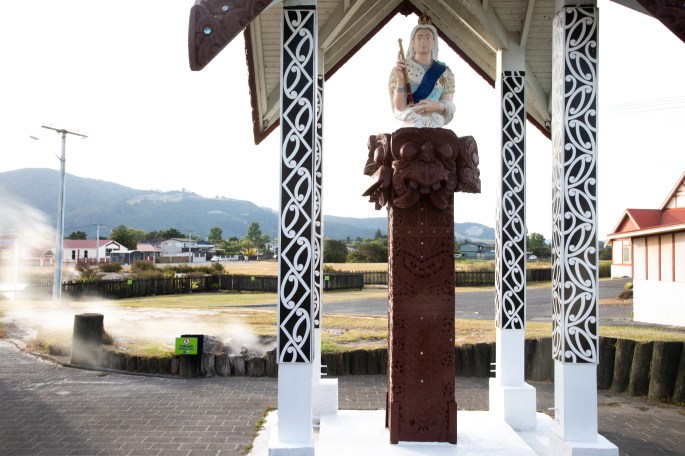
And close to the marae entrance stands a bust of Queen Victoria perched on a magnificent Maori-carved plinth. The bust was donated to Te Arawa in 1870 by the visiting Duke of Edinburgh. A few days before us, Ohinemutu was again visited by royalty, Harry and Meghan. Our hosts told lovely stories about interlopers trying to get in on the photographs.
Most moving for me, though, in the late evening light, was walking through the graveyard dedicated to those warriors who had served, then returned to normal lives. There are Maori in military graveyards across the world, and their service is being recognised increasingly, yet this is one of the most telling reminders of how much Maori have given to New Zealand and how relatively little they have had in return until recently.

_D8A1396-3
Ihaka might have been moved, too.

Protagonists like him worldwide, then, have back stories along with their strengths, flaws, failings, quirks, absurdities and ordinariness.
All that and more was present in Rotorua where well-known, successful writers mixed readily with lesser lights, about-to-be and hope-to-be writers, and readers. The community just got together to encourage each other. Internationally acclaimed writers Michael Robotham, Alex Gray, Lilja Siguroardottir and Kati Hiekkapelto set an openness and approachability that helped a set of Kiwi writers get to know each other, having met previously only in the social media world – there was a lot of “really good to meet you here instead of on Facebook”.
Sessions covered the full range from discussions of specific books through the tribulations of debut authors to film scripting, setting, character development, research and, inevitably, the mechanics of publishing.
By chance, that last topic has shot to prominence globally in the last few days with Ian Parker’s New Yorker expose of Dan Mallory aka A J Finn, writer of the bestselling The Woman in the Window. https://www.newyorker.com/magazine/2019/02/11/a-suspense-novelists-trail-of-deceptions
If you haven’t yet read about or caught up on this, you must!

Highsmith
It is a thriller in itself. Parker reveals Mallory as a serial liar who matches or exceeds Patricia Highsmith’s The Talented Mr Ripley. Fittingly, Mallory wrote academic pieces on Ripley, then later lied about having not one but two PhDs. He also claimed to have lost his parents and a brother to cancer when they are very much alive, and to having had serious cancer himself when that is apparently not the case. Parker suggests Mallory falsified his credentials to gain senior positions in publishing. In a wonderful twist, Mallory became the editor for Sophie Hannah who was rewriting Agatha Christie. She grew suspicious, hired a private detective to dig into his story, then made the results a plot line in one of her own novels. You cannot make this stuff up, as they say.
Necessarily, a torrent of commentary has ensued, swinging largely around the idea that although women dominate the publishing workforce, charlatan males like Mallory reach the top more readily. It might well be more about why the industry did not deal with him long ago. One telling story is that half way through the bidding war for the book, A J Finn’s real identity was revealed. Almost all bidders immediately withdrew with his own house left to buy the rights. He was a well-known problem but allowed to continue despite spectacular behaviours, like leaving urine-filled paper cups near out-of-favour colleagues’ desks

.
It should be noted Mallory has denied most if not all these behaviours, and issued a statement saying that he has mental health issues. https://www.telegraph.co.uk/news/2019/02/05/bestselling-author-dan-mallory-admits-wrongly-telling-people/
Even more seriously from a writer’s viewpoint, there are now close investigations of Mallory’s book itself, with suggestions it might not actually be that original. Some critics have pointed to it having a strong similarity to the 1995 film, Copycat, and others are likening it to other much lesser known books.
Leaving aside the obvious point that “originality” is moot – as discussed by Plato and Aristotle right through to Joseph Campbell’s work on myth and Christopher Booker’s more recent idea of seven basic plots – this may be the result of publishers looking for “more of the same”. Because Pamela Hawkins’ The Girl on the Train and Gillian Flynn’s Gone Girl worked so well, then publishing houses search desperately for equivalents and along comes The Woman in the Window.
Just one of the many strands here includes the idea that academia now routinely uses anti-plagiarism software like Turnitin. Does the publishing industry have such a weapon, and is it used even on the hottest property, or does the lure of the market dictate all actions?
One further irony is that for authors, getting reviews on Amazon is now so much more difficult. In wake of revelations about some authors reviewing themselves and deriding others, Amazon turned the screws. Now, in some cases at least, it seems that the screws should be on the book rather than its reviewers.

Drayton
Ideally, this scandale would have coincided with Rotorua Noir. In our company, for example, was the wonderful Joanne Drayton whose The Search for Anne Perry identified that writer as having originally been Juliet Hume. Along with Pauline Parker, Hume was convicted of having killed Parker’s mother in Christchurch in the early 1950s, but then relocated to America to successfully remake her life. Maybe Jo should write the Mallory biography.
But the Mallory event coming in the wake of Rotorua Noir has been stimulating enough and sharpens the reading. I am currently enjoying The Silent Death by Volker Kutscher of Babylon Berlin fame. It is good, but reminds me just how much we lost with the untimely death of Philip Kerr whose Bernie Gunther novels remain a marker of great crime writing.
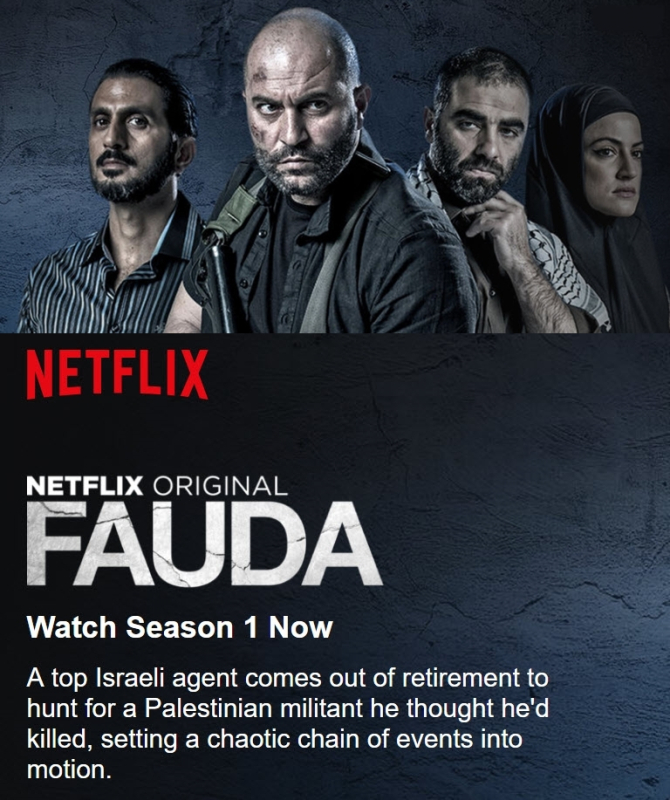
Then, I am binge watching Season 2 of Fauda, an Israeli-made series featuring an undercover special forces unit and its campaign against Hamas. It is well written, underscoring the complex turns taken by Israeli and Palestinian interests and the surprisingly intertwined interests of all the rival factions. That level of complexity complicates personal as well as professional lives in a region where life is lived at maximum adrenalin. And an added bonus is the footage that shows the nature of living in crowded places like Ramallah and Nablus.

Fauda
When I was working in Jordan, a Palestinian colleague asked how long it would take me to fly home to Melbourne in Australia. I said about 17 hours.
“That is about the time it will take me to get home from Amman to Nablus,” he replied, “because of the checkpoints.”
The distance between Amman and Nablus is 70 kilometres.
Fauda captures that intensity, even if there is the inevitable quibbling about its politics. https://www.reddit.com/r/Israel/comments/7y7ja2/opinion_fauda_creators_think_arabs_are_stupid_in/

In its own way, Rotorua Noir, too, caught an intensity – of Kiwi crime writing that is now much encouraged as a result, and looking forward to the next festival.

More Of The Same?

It has not been dull since the last post.

Even this early in the new year we have Theresa May’s massive mauling over Brexit in the British parliament; America’s longest-ever government shutdown brought on by Trump’s Wall; Mike Pence’s “ISIS is defeated” moment made a mockery of by the killings in Nairobi; France recently stand-stilled by the most ingenious ever use of hi-vis jackets; and the Australian government’s belated turn to the Pacific blighted by a ham-fisted attempt to have one of its homegrown terrorists become Fiji.an

Last year ended more serenely for us with two cruises on which I was a guest speaker. The first, on Seabourn’s Encore, began in Dubai (where a chance discovery means that Sandi now wants to go there regularly for hair appointments) and finished in Singapore via ports in the Arabian Gulf, India, Indonesia and Malaysia.

2018 best-36

India was its marvellous usual self with all the haggling, revelations, discoveries and fun. In Mumbai (that I still call Bombay) it was great to revisit all the old architecture, quirky shops, and all the cricket matches going on around the city.2018 best-48

Further south, Kochi remains one of the nicest places to visit in the country with the Chinese fishing nets a timely reminder that the India-China relationship, now so topical, has been going on for centuries. Zheng He, the great Chinese navigator, died off the Kerala coast almost six hundred years ago, something my cruise audiences always find astonishing. Globalisation has been going on for a long time.2018 best-53

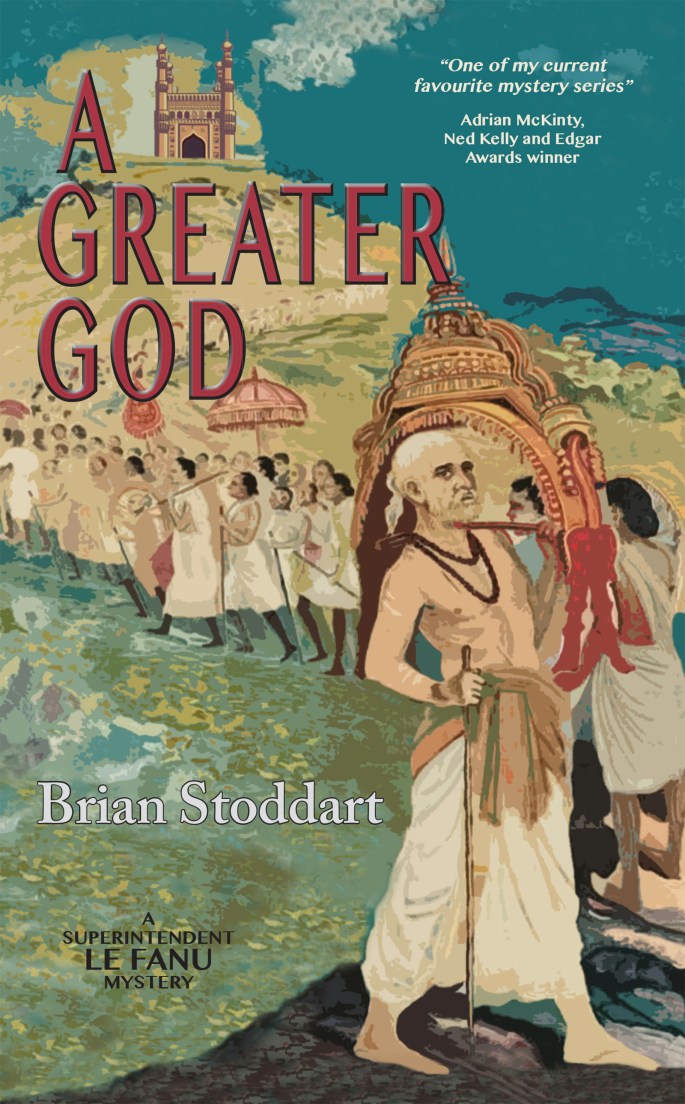
My new Le Fanu novel, A Greater God, appeared as we left the ship in Singapore, since then sparking the usual business of watching reviews which, thankfully, have mostly been good.

AGG 51vgUz7FVUL__UY250_

The complex publishing world is now beset perennially with issues prompted by reviews and the associated promotions that seek recognition among a welter of new contenders. Amazon now makes it difficult for reviews to be posted, in the wake of several so-called “sock puppet” incidents where authors anonymously either puff their own books or/and deride others in the genre. Now there are questions on blogsites about whether or not negative reviews should be allowed. It is obviously desirable to strike a balance between praise and suggestion, but it must be achieved if the review is to have serious purpose and impact. Real barbs, though, are rare in this new Age of Sensitivities.

One recent one, though, came from the sadly missed A. A. Gill who won a Hatchet Job of the Year Award for this comment on Morrissey’s Autobiography:

He has made up for being alive by having a photograph

of himself pretending to be dead on the cover.

Such cutting remarks were common in an earlier age, with the American Dorothy Parker to the fore. Having read A.A. Milne’s The House at Pooh Corner, she informed her readers:

And it is that word ‘hummy’, my darlings, that was the first place

in The House at Pooh Corner at which Tonstant Weader fwowed up.
The Pooh books remain among my favourites, Parker notwithstanding, not least because the cricket-loving Milne made sure that Douglas Jardine, the English cricketer Australians love to hate, received two copies of each new one signed by himself and the wonderful illustrator, Ernest Shepard, whose archives are now at the University of Surrey.

Gore Vidal was another acerbic reviewer, this among his more noted observations:

What other culture could have produced someone like

Hemingway and not seen the joke?

Those days are passed, mostly, but there are times when it would be better they had not – like whenever another Shades of Gray variation appears. But not for Le Fanu, of course.

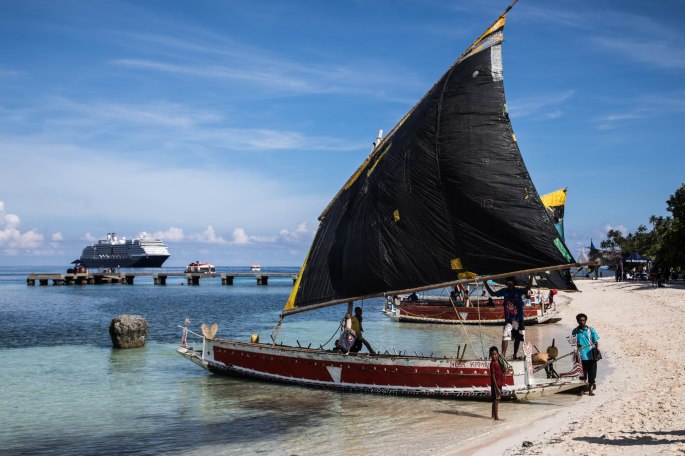
The second cruise was very different, from and to Sydney through the Coral Sea to Alotau in Milne Bay, Papua New Guinea and onto some of the nearby islands, most notably the Trobriands. Those last were a highlight for me, for two reasons.

Kiriwina was where Bronislaw Malinowski found himself stranded during World War One and produced Argonauts of the Western Pacific, one of the first great works of ethnography and social anthropology.malinowski_trobriand_isles_1918

And the second reason was related, because this was where the Trobrianders famously adapted cricket, brought in by the missionaries, to more resemble their own cultural practices. I have now seen that game on the ground, if only in demonstration form.2018 best-65

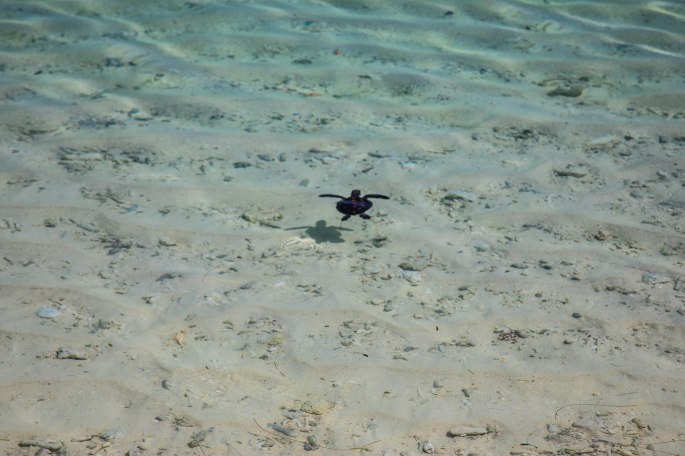
As ever in these travels, there were reminders about how the natural world is changing. On the Conflict Islands, owned by an Australian conservationist, we helped release a young Hawksbill turtle hatchling. In normal circumstances, if it was a male it would never return to land, even though these turtles can live up to one hundred and fifty years. If it was a female, she would return to the release point in thirty years to lay eggs. But, we were told, it is entirely possible these turtles might well be extinct in thirty years.2018 best-64

Given that, scathing literary reviews seem very much a First World Problem, and a point at which to think about some of my own readings. I will admit to a few books started and not finished, but not name them because choice and taste are so selective. A couple were just too dark and graphic for me, another couple too meandering, and a couple simply boring, for me.

You could never accuse Ian Rankin of those crimes, however, and In A House of Lies ranks high among my 2018 favourites. We all know the work that goes in, but he writes oh so easily, on point and every word telling. The characters develop more, with Rebus suffering from emphysema, and the dialogue is natural with a compelling storyline. This man deserves all the praise he gets, and more.in a house of lies

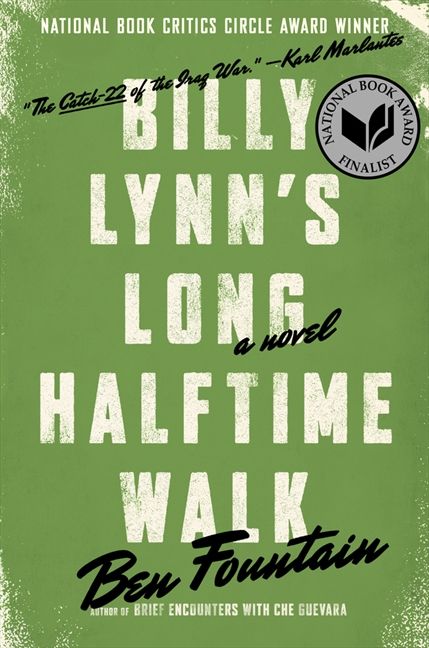
Ben Fountain’s Billy Lynn’s Long Half Time Walk is totally different, but something I enjoyed reading.

ben fountain

The book involves a promotional tour of America by a group of soldiers come to prominence for an action in Iraq. Their propaganda tour sees them accompanied by an agent trying to raise funds for a film, and the book covers a Thanksgiving Day visit at the Dallas Cowboys stadium where Billy Lynn encounters a cheerleader. These soldiers have to return to the field, however, and Ben Fountain has his characters experience the emotional doubts covered in David Finkel’s marvellous two non-fiction works, The Good Soldiers and Thank You For Your Service. Ang Lee made a film of Billy Lynn that failed at the box office.

Totally different again was Annie Haynes’ The Man With the Dark Beard and you will know why I read it when I tell you that the protagonist is Inspector William Stoddart.the-man-with-the-dark-beard

Annie Haynes herself remains a mystery but is now recognised among the best of the Golden Age of crime fiction alongside Christie, Allingham, Sayers and Marsh. She was sponsored by an upper-class friend and produced a slew of novels in the 1920s before her death from rheumatoid arthritis. The book is classically focused on “the mystery” (a murder, of course) and the characters, with the possible exception of the villain, do not develop all that much. There are moments where the storyline is bolstered by fortuitous information gained effectively “off camera”, and that would not do these days. But Haynes could write. One critic has Inspector Stoddart as a likeable figure and I do not get that yet, but perhaps the other three Stoddart mysteries I have yet to read will help.

One of my other best reads for last year was Lou Berney’s Long And Faraway Gone which is terrific. His November Road then appeared to wide acclaim and it is good, very good, but for me does not match the earlier one.november road

The writing is marvellous, the characters memorable, and the story line strong. In wake of the Kennedy assassination, a womanising mobster goes on the run having stumbled into the connections that made the hit and want him dead, too. On the road, he encounters a woman and her two young kids heading to California and away from an alcoholic husband/father. The mobster seizes an opportunity to become a family man to confuse his pursuers. Interplay between him and the woman is believable, and he becomes more of a human. The resolution lost me, but is still a very good book.

And for something completely different, Sandrone Dazieri’s Kill The Angel. sandrone dazieri

In translation from the Italian, it follows Kill The Father but works as a standalone. A train arrives into Rome with one of its upscale carriages full of poisoned passengers. Terrorism is the first thought but the case goes to Colomba Caselli, a trouble cop who immediately calls in her even more troubled mate, Dante Torre. They eventually uncover a massive conspiracy and mass murder trail involving a ghost like woman come from the old Soviet regime. Much of this is fantastical, semi-believable and, in parts, Tarantino-like in its casualised mayhem and violence. But it is a good read.

So that has brought me into the new year with more books to read, some crime shows to watch, with several writing projects and other fun to be fitted in.

I’ll keep you posted.

Booking In

This has been one of those years during which time has disappeared, almost literally. It seems inconceivable that the last blog post was so long ago (please check: I cannot bear to date it). A combination of professional tasks have required a long presence in Sydney and upset a few timetables, but the real problem is that the world has gone completely mad.

Australia changed prime ministers.

Morrison article-11823-hero

Some might rightly say, “Nothing new there, then!” and might very well be correct. When the egregious Peter Dutton mounted his open attack on the hapless Malcolm Turnbull (“Malcolm in the Muddle” as one wag retitled that old television show), our political cynic daughter Laura had another view. As Scott Morrison emerged from the rubble as the new boss, her view was that someone had been watching way too much television and channelling Frank Underwood in the Spacey version of House of Cards. Although Melania is no Claire, perhaps.

The American real life version of that show has continued apace, of course, and combining the “Me Too” dimension via the appalling Brett Kavanaugh nomination to the Supreme Court process. Kavanaugh’s sponsor has wreaked change on us all. At least some of my complications this year emanate from Trump’s confrontation with China that has bashed share markets everywhere including Asia. That all has an indirect as well as direct impact on the global higher education system. For example, the multi-leader Australian government’s siding with Trump in belting China has some Australian university bosses worried that the rivers of funds from Chinese international students might get dammed by the Beijing bosses. So the starting figures for those students next February in Australia will be watched closely.

Across in the UK Theresa May’s dance moves have attracted as much derision as her orchestral manoeuvres in the dark with the EU as a “hard BREXIT” looms. Hundreds of thousands of people have just turned out in London in support of a new people’s vote, while the Tories flirt with their change of leadership that might involve Jacob Rees Mogg or Boris Johnson, both of whom best belong in a political satire show rather than in real life.

The Saudis have apparently killed one of their own in the Istanbul consulate; the war in Yemen rages; Syria now contemplates massive reconstruction after years of conflict; Chinese financial power around the world raises the prospect of a new order of power, especially but not exclusively in Africa; Italy totters on the edge of another financial collapse; and even New Zealand seems to have succumbed.

Since her election a year ago the world has been agog at Jacinda Adern, witness her starring role at the UN and, more importantly, on the Stephen Colbert Show. https://www.youtube.com/watch?v=aYsZv9JXmio   At home things have not been quite so rosy and, until the past few days, a one-term Adern gig seemed likely. Then the opposition National Party blew itself up. A renegade national MP went public against his leader, releasing privately recorded conversations that upset a lot of other members. At the heart of this was the alleged manipulation of party political donations from a Chinese businessman. Then the renegade was himself outed as a “Me Too” offender, claiming to have had an affair with the party’s deputy leader, before admitting himself for mental health assistance. It has been one of the most sensational events in NZ politics for a while, and made Adern look like a steadying force, especially as she seems also to have tamed the ever-present kingmaker, Winston Peters. https://www.newshub.co.nz/home/politics/2018/10/the-ultimate-guide-to-all-the-players-in-the-jami-lee-ross-vs-simon-bridges-showdown.html
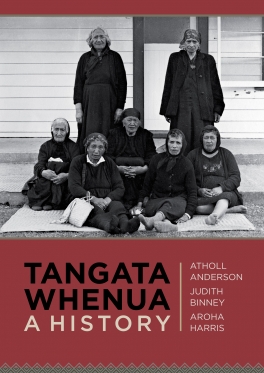
Even that has not spoiled the pleasure of a brief return to Queenstown where spring has finally arrived and good bike rising weather along with that.

And another way of escaping all that madness has been to catch up on some reading.

Johnson 260

When the American writer Denis Johnson died last year, several writers whom I really respect noted how much they liked his work. Having never read his work I went off finally to devour The Laughing Monsters. It is extraordinary and almost impossible to describe, but think of a cross between Conrad’s Heart of Darkness (or Brando’s Colonel Kurtz-version of that in Apocalypse Now) and Evelyn Waugh’s Scoop. A couple of double/agents with a tortuous history meet up on a private wealth-gathering expedition in Africa, one of them accompanied by his about-to-be-wife who is the daughter of an intelligence boss. While the outcome is inconclusive, the story telling and use of language is in parts mesmerising and always compelling. If you want to escape the normal reading rut, this is a great candidate.

Atkinson 515yOwZ9m8L__SX320_BO1,204,203,200_

I was less impressed by Kate Atkinson’s new book, Transcription, although many reviewers like it. She has been one of my favourite writers since I read Case Histories years ago. This new book is based around the imagined life of an ingénue woman recruited into British spy services during World War Two. Her role is to listen to then type out the printed version of secretly recorded conversations among low level Nazi sympathisers. It is a brilliant idea, Atkinson’s writing is as sharp as ever, and parts of it are terrific with the characters memorable. For me it limped along a bit, but maybe I just loved Case Histories too much – if you haven’t read that then please do, some of the most marvellous crime writing.

Cathi Unsworth 781781257272_3

In a similar setting, Cathi Unsworth’s That Old Black Magic is altogether different and more captivating, even if the conclusion is a bit too cerebral for me. This, too, focuses on people in Britain who did not support the war effort and on attempts to bring them to book, but locates many of these people in the world of the occult and the supernatural. Central to unravelling this is an undercover cop who himself has a occult connection as well as a flair for the show business life and suggestions of a few other different lifestyle inclinations. I really liked Unsworth’s capture of the period and this particular subculture, the characters are memorable and the plot lines clever. Well worth trying.

Joseph Kanon’s Istanbul Passage is set in that city’s immediate-postwar life with spies and counter-spies on every corner, and an American businessman recruited into an operation that is well beyond his understanding. https://www.nytimes.com/2012/06/03/books/review/istanbul-passage-a-novel-by-joseph-kanon.html  This is one of the best things I have read for a while, as is Alan Judd’s Uncommon Enemy that covers a similar set of themes in postwar Britain. https://www.spectator.co.uk/2012/03/thirty-years-on/ Both writers develop character extremely well, their story and plot lines are excellent, and the overall atmospherics convincing.

Donna Leon has been an exemplar of crime and place, and I have written elsewhere how I once spied her in a waterside restaurant in Venice and how her books were my guide to that city on my first visit. There are now well over twenty Guido Brunetti mysteries and perhaps I have now read too much other good stuff but The Temptation of Forgiveness did not provide the satisfaction of the earlier works.   https://www.kirkusreviews.com/book-reviews/donna-leon/the-temptation-of-forgiveness/ Brunetti now rails routinely against the depredations of tourism and tourists who make life miserable for the few remaining Venetians, and the crimes he investigates have some neat twists. But he remains essentially ageless, not much changes. His boss is as unfathomable as ever; the boss’s ever-ahead-of-the-game expert hacker is as strong as ever; his colleagues are as much as they ever were, just like him and his family. The city changes, but not them. These days, crime fiction is very often about personal change – think Wallander and say no more. I don’t get this from Guido now, and sadly so, because he has been a central part of my crime life.

Early next year I will be a part of Rotorua Noir, https://www.facebook.com/KiwiCrimeFiction/ , so it is fitting that I round out my recent reading with a couple of authors who will star there.

Sussman the-last-time-we-spoke

Fiona Sussman won the 2017 Ngaio Marsh Award with The Last Time We Spoke, the story of a violent home invasion in rural New Zealand, and the consequences of that for all  involved as victims or perpetrators. Set firmly in the “domestic noir” mode, now so strong in the UK and elsewhere, it is harrowing in parts, but realistic in capturing the New Zealand underbelly, as it were. And in doing it explores dimensions of the contemporary Maori and Pasifika experience, laid bare earlier in Alan Duff’s confronting Once Were Warriors. Sometimes overwhelming, it remains impressive because Fiona Sussman is a seriously good writer.

Carter 9781925164534_RGB

So, too, is Alan Carter who recently won the 2018 Ngaio Marsh, for the cleverly titled Marlborough Man, and so added to his Ned Kelly Award for best debut of a few years ago. Here, an English undercover cop fleeing a criminal boss intent on revenge is relocated to rural New Zealand, specifically the Marlborough Sounds and Nelson, best known these days for the astonishing amount of sauvignon blanc it produces. This has serious characters and a strong story arc but with banter and light relief, wordplay and interplay between characters, and a back story of domestic pressure in the cop’s family life. It is a good read.

Meanwhile in other news. My Crusaders (you know I hate the Orientalist name) won the Super Rugby series yet again; and the All Blacks the Rugby Championship despite losing at home to South Africa – that was a timely reminder for the ABs heading into next year’s World Cup. The International Cricket Council had Dubai-based Pakistan flogging Australia in 40C+ heat, while India at home has been flaying the West Indies who are no longer the force they were when I played in Barbados long ago. And the Dodgers are in the World Series for the second year in a row, and we fans hope for a better display than against the Astros last time. But they are up against a massively talented Boston so who knows.

This next bit will have come to the attention of those who followed the link to Rotorua Noir.

AGG cover KDP 14 Sep.indd

Le Fanu is back.

In my last couple of blogs I mentioned that Le Fanu 4 was under way. Well, now, amidst all the chaos recounted earlier here, he is ready to reappear in A Greater God.

Le Fanu returns to Madras from the adventures of A Straits Settlement, intent on getting back to Penang as fast as possible, attracted by Jenlin Koh and a new post. But things get complicated, naturally. Hindu-Muslim tension is rising in 1920s Madras, affecting the working relationship between Habi and Jackson Caldicott, Le Fanu’s two main police offsiders. Arthur “The Jockey” Jepson is exploiting that in a campaign for ever higher office as Le Fanu’s major government supporters prepare to leave the Presidency. Le Fanu’s personal life becomes complicated, again, as the professional problems mount and he comes under severe pressure to resolve his future.

Auckland’s wonderful Adrienne Charlton has been a sensational editor on this one, and from her I have learned an enormous amount. http://www.amproofreadingnz.com/    It is a running joke that she insists I do not use enough semi-colons and I insist she wants too many hyphens. But the final quality of the book owes much to her, as does its very presence on several global platforms awaiting a late-November release. If you need an editor, then I recommend her most highly.

And Adrienne thinks A Greater God has a stronger complexity than its predecessors, and a bit more of a “slow burn”. Maybe I was thinking about Guido.

I do hope you will all like it when it comes out, and if you do then needless to say I would love for you to post reviews on Amazon and anywhere else you can find.

Many thanks.

Crime, Place, Character

As you know, I’m intrigued by the connections between crime fiction, place and people (or characters, to be more specific). There is now a broad and extending idea that crime fiction is among the largest selling genre forms for a reason – it provides insights into the general human condition wherever that is found. And that adds to the other modern mantra on the form, that it is now more about the people than the puzzle. To understand that, just juxtapose Agatha Christie with Denise Mina or Megan Abbott and you’ll spot the difference.

Megan Abbott

Of course, there are always exceptions. Among my favourite crime writers is Michael Innes, the pen name for J.I.M. Stewart, a Scot who was Professor of English at Adelaide from 1936 to 1946, during which time he began the Sir John Appleby series. Appleby himself developed considerably over the fifty years that Stewart wrote the books, and so did the other characters and crises. That befitted such an acute observer as Stewart whose A Staircase In Surrey quintet (written in the 1970s) remains one of the great campus novel series. But as always, that exception goes to prove the general rule.

J.I.M. Stewart

What may also be taken from Stewart/Innes is the idea of place and milieu. For him it was the cloistered university and the largely decent upper class set, a sort of early version of Midsomer Murders. Because of Christie and the rest, that social strata was for a long time the go-to site for the crime novel, and has been extended dramatically only in relatively recent times. Among the many reasons the rise of Tartan Noir has been so important is precisely its break from that tradition, starting with Willie McIlvanney’s works.

Across the Atlantic, it was very different from an earlier point, another indicator of the intricate relationship between the specific crime fiction form and the culture that produces it. Dashiell Hammett had introduced his hard boiled Sam Spade by the early 1930s, a clear reflection of his own life as a Pinkerton that helped him pioneer the life on the street genre. There is a clear line from there to the wonderful work of Michael Connolly whose Bosch is in so many ways Spade’s direct descendant.

I have been thinking about all this again of late having time in Sydney, Perth and Hong Kong as well as New Zealand. That has been aggravated by reading and viewing choices that always raise the question about what works and why. And for me that always involves place and culture, but it also involves believability.

Why is it, for example, that these days anything set in Scandinavia is automatically regarded as a compulsory read or view? Sweden has just 9.9 million people, Denmark 5.7 million, Finland 5.5 million, Norway 5.3 million and, spectacularly, Iceland only 337,000 inhabitants. That last is spectacular because Iceland Noir is all the rage. The number of published writers per 100 people there must be very high. And the impact of the crime writers far outweighs these figures: think Stig Larsson, Jo Nesbo, Yrsa Siguroardottir and all the rest.

By comparison, New Zealand also has many writers among the 4.8 million inhabitants that put it on a rough par with the Scandinavian countries. Over sixty entries turned up for the current Ngaio Marsh Award round. Yet with all due deference to Paul Cleave, no Kiwi comes close to having the impact of any Scandinavian writer. Given similar landscapes and all that, why should that be so?

Paul Cleave

One funny clue might help start the analysis. At Crimefest a few years ago the inimitable Simon Brett delivered an after dinner speech that was a spoof on a Scandi krimi. “He brooded. He brooded some more. He brooded for a long time.” It was an affectionate homage to Henning Mankell and Wallander, but also food for thought. Put simply, perhaps simplistically, Scandinavian writers find a surprisingly large number of intense characters in among those small population numbers.

This comes out somewhat in the Jo Nesbo-inspired television series Occupied where Norway is taken over by Russia, sparking all the usual questions about collaboration or resistance, challenged relationships, intrigue and double dealing. And in this case, the role of the European Union provides a marvellous additional source for both setting and story.

Occupied

It would be difficult to do that in a story that had New Zealand occupied by Australia. Besides, New Zealanders will tell you they don’t “brood”.

The Occupied storyline is marvellously intricate and the second season probably as good as the first, although the heroic Prime Minister turned resistance leader has become somewhat irritating both personally and professionally.

I am watching that show having binged Harlan Coben’s Safe season that somehow did not impress. The combinations provide a clue. This joint English-French production for Netflix is set in an English gated community and masterminded by Coben, the quintessential American writer. A widowed surgeon still bothered by his behaviour during his wife’s last days now struggles to deal with his young daughters and is in a clandestine relationship with a neighbour who just happens to be the local detective sergeant. One of his daughters disappears after her boyfriend turns up dead in a swimming pool at an unauthorised teenage party that gets out of control. The detective sergeant handles the case but the surgeon runs his own alternate investigation, and both turn up a myriad of back stories that may or may not explain the events. Without giving anything away, the final plot turn challenges believability.

Safe

That last point is why Safe did not work for me. The gated community does not come across so well in the British setting, and while its inhabitants are admirably modern Brit in the cross-cultural sense, it is not evident how some of them end up living in what is obviously an expensive place. The surgeon, yes, but the loner hoarder who lives next door, hardly. And the tone gets stuck between the serious and the comic, with the actions of the mixed-marriage family on whose property the body turns up becoming pure slapstick.

Safe lacks a coherent cultural core, Occupied carries that strongly. The result is powerful: the Safe storyline is inherently more believable that that in Occupied (party goes wrong versus Russia occupies Norway) yet structure and grounding make it far less believable.

So if the Scandi settings are so believable, both in book and on screen, why is it that places like New Zealand and Australia are a harder sell leaving aside obvious standouts like Jane Harper’s justifiably triumphant The Dry? In part it is a cultural thing: it is far easier to be impressed by somewhere else than by your own settings. Paul Cleave makes Christchurch seem a dark and complicated place, but you’d generally have a hard time convincing other Kiwis that was so. The sadly now late Peter Temple made Melbourne seem internationally nuanced, whereas Peter Corris’ Cliff Hardy books set in Sydney started with Hammett but morphed quickly into an attractively disdainful and diffident riff.

Peter temple

In one sense, like New York, LA, London and Edinburgh (thanks to Rankin) the Scandi sites have become believable as crime sites. So if you write about them you’re off to a fast start with a reader. In recent years those sites have expanded. Think Chan Ho-kei’s Hong Kong; Fred Vargas’ Paris; Ovidia Yu’s Singapore; Ankush Saikia’s Delhi; Jean-Claude Izzo’s Marseilles and Seicho Matsumoto’s Tokyo.

Matsumoto

It would be a far tougher sell to start with, say, my home town of Ashburton even though in recent years it has had an unsolved murder and an office shooting carried out by a disgruntled client. While most of us would think that small place settings eliminate complexity (because everyone knows everyone else), the Scandinavians have made that work, largely by way of the characters themselves.

That comes through in another Norwegian show, Borderliner. A big town detective goes on forced leave having accused a senior officer of corruption. Back in the small town where his brother is also a cop and his father the retired sheriff, the visiting detective is pressed back into service by another officer come from the outside to investigate an apparent suicide. The show floats constantly on the margins of the incredible, but survives by stressing the differences in people and their motivations. That could work with Ashburton.

Borderliner

As I contemplate a substantive edit on the new Le Fanu, then, I think a lot about this dimension. The setting in 1920s colonial Madras (then one of the British Empire’s largest cities) is a good start for most readers, but the characters still need to ring real in that setting and in their behaviours. Therein lies one of the essential writing challenges.

Straits

Antipodean Crossings, Global Readings

For the past several months Sandi and I have been Antipodean hopping, between Queenstown, Sydney and Western Australia so that somehow 2018 has arrived and already started to disappear.

Most recently we were in Perth to see long time friend Kim Beazley installed as Governor of Western Australia.

Kim

There is a history there. Kim was among the first people I met when I arrived in Australia way back then and Susie Annus, his wife, went to school in Perth with Sandi. It is wonderful to be able to celebrate the ongoing successes of such lifelong friends, and to renew a few acquaintances along the way.

Along with that I was able to escape to my sister-in-law’s vineyard in the southwest of Western Australia and finish the main draft of the new novel. As usual some of it is still very rough, but I am of the school that finds it easy to chop and refine once I have words, any words on a page. Well, there are more than 90,000 of them on several pages now so plenty to work with, a major relief.

But I have fitted in some reading and, regrettably, one of the best reads had a really sad touch to it.

Philip Kerr

Recently we lost Philip Kerr, that marvellous creator of the Bernie Gunther series that began a long time back with his Berlin Noir trilogy, took a several years break then returned with a lot more. His latest, Beware of Greeks Bearing Gifts, appeared just days after his death and I will set aside a quiet time to take that in.

Prussian Blue has all the hallmarks of this wonderful series: clever and intricate plot, memorable characters, sparkling dialogue, persistent noir humour that is an homage to Dashiell Hammet, impeccable research and historical context, and just magic writing. Not only was he commercially successful, he was a writer’s writer in that there was always something to learn from him.

babylon berlin

While watching the current Netflix sensation, Babylon Berlin, based on Volker Kutscher’s novels, I was reminded constantly of Philip Kerr. The series is set in Berlin in 1929 as fascists, communists, reactionaries and decadents all respond to the rise of Hitler amidst Berthold Brecht and all the rest. Protagonist Gereon Rath bears all the Bernie hallmarks, and much of the story and its setting simply reinforce just how well Philip Kerr got it.

He was no one-dimensional  author, however.  He was prolific across children’s books, the Scott Manson series and several standalones.  Before Prussian Blue I had read Research in which the wife of a major pulp fiction writer is found dead, and the writer’s old ghost team comes back into the picture. It is brilliant, well worth a read for its plot twists, character development, scene setting and, as always, dialogue and general prose.

What a loss this has been, but Bernie remains as one of the best ever creations of crime fiction.

Luckily, though, there are some brilliant new writers coming along and one of them is Australia’s Emma Viskic whose Resurrection Bay won several major awards including a Ned Kelly.

9f1668f6d0758749b618f5deec76c876

That has now been joined by And Fire Came Down, the second Caleb Zelic adventure. Cal is deaf and survives as an investigator through highly developed lip reading skills, tenacity, and the odd assistant along the way. At the heart of this is signing, and in the first book there is a marvellous unfolding of an introduction to him, his tics and his skills.

Emma Viskic really can write and one of her great skills, rather like that of  the late, lamented Peter Temple, is the ability to make commonplace sites well known to Victorians immediately credible as threatening, brooding venues for violence and criminality. She puts her characters through the wringer and makes it all believable.

Ace Atkins

And then there is Quinn Colson, the creation of Ace Atkins. Quinn is a Mississippi Sheriff, a local boy and returned Ranger who served in Afghanistan.  He has his problems, of course, but he knows the local landscape and all its cultural contours. The Fallen is number 7 in the series and features a prolific gang of bank robbers who turn out to be ex-Marines who also served and now crave the adrenalin raised in battle as much as they do the money. A marvellously Machiavellian madam cons one of them into hitting a local drug mob and it all goes wrong, bringing down the ire of the Missisippi Mafia who in turn set out after Colson.

This is high action stuff arced by wonderful dialogue that captures “The South”, some just glorious characters who develop beautifully, excellent scene setting, and a lot of contemporary references – the bank robbers wear Donald Trump masks.

It probably says way too much about me, but I enjoyed this more than I did Attica Locke’s Bluebird, Bluebird that recently won the Edgar Award in America for best novel, a book set also in the south.

Eva Dolan’s This Is How It Ends is a lot of people’s favourite book of the year so far and it is good.

Eva Dolan

There is a lot of crime fiction about, as we know, and it takes a lot to stand out but here the plot line and the character development is way beyond and above the average. Without giving away too much, the main character begins as a PhD researcher into the British women’s activist movement, but as the book evolves she morphs into something very different. I was a little disappointed in the ending but, nevertheless, this is a stellar book.

Brush with fame: back in 2014 my A Madras Miasma was rated among the best ten debut books of that year by one of the UK’s best crime fiction website. I was at No 8. The No.10 slot was held by Clare Donoghue who has gone on to great things while at 9, Sarah Hilary has done even better, winning the Theakston. Way up at No 2 was Eva Dolan who, as you can see, is still a star. https://crimefictionlover.com/2014/11/ntn-the-top-10-crime-debuts-of-2014/ 

Nobody's Fool

And right now I am way into and just loving Nobody’s Fool by one of my favourite writers in any genre, Richard Russo whose The Straight Man remains among the very best campus novels ever written: “Who else but an English professor would threaten to kill a duck a day and hold up a goose as an example?”.

In this one he unlayers life in a small upstate New York rustbelt town and , much like the now pariahed Garrison Keilor, makes a marvellous symphony out of the simplest tune. Sully is a sixty year old wreck who lodges with a widow and has been cuckolding a largely unsuspecting husband for twenty years, and who survives day to day by wisecracking his way through the crisis that is his life.

Russo is a master storyteller whose ear for the local argot matches Ace Atkins’ for the south and whose characters all have the authenticity of Bernie Gunther. The plot lines and story trajectory are magical, and he is a joy to read.

There will be a bit more reading over the coming days before a commercial commitment in Hong Kong after which, hopefully, I will be back in Queenstown to ride the mountain bike during the crisp mornings by the lake before going back to edit Le Fanu and, again hopefully, having learned something from all these great talents of the craft.

Tasman iPhone 011