
For all those who breathed a sigh of relief at the end of 2020, the first quarter of 2021 will have been yet another shock.
Here in Australia the political scene nationally and at state levels alike has gone from worse to abysmal – politicians never rated highly on the popularity index but right now they might not even be on that index.
A series of dreadful misconduct revelations have seen women vote with their feet to express outrage over sexual and domestic violence. The establishment’s response has scarcely registered a tick. In fact, every response seems to guarantee yet another outrage spike that is having a serious impact on Scott Morrison’s government polling.
Morrison himself has floundered, at best, with all this and cannot find a way to assure women in particular and the population at large that he has a clue about what to do. For example, his comment that wife Jenny alerted him to the seriousness of sexual violence drew widespread incredulity.
His major cabinet reshuffle was a case in point. A kneejerk response that elevated several women into new and important positions misfired somewhat, not least because one of those anointed is on record as having said derogatory things about transgender people.
While all that has occurred, an astonishingly chauvinistic to the point of being racist attack on China has escalated to alarming proportions. Ill-informed commentators like former politician Bronwyn Bishop would have us prepare for conflict.
Meanwhile, the COVID vaccines rollout continues at snail’s pace alongside periodic virus flare-ups that lead to instantaneous border closures that in turn infuriate the public, prompt yet more questionable public purse bailouts of companies like QANTAS, and generally aggravate the public.
Australia’s universities lurch inexorably towards more impecunious conditions, trying to maintain the fiction that COVID smashed the international student market, the government did not help, and that more funds are needed. More and more cuts are appearing, student unrest is growing, and most of the media continue to get it wrong.
And the media is in the middle of all this. Right wing commentators like Gerard Henderson blame the “leftist” ABC and its university allies for everything that is wrong. Papers like The Australian have tapped an unending supply of commentators somewhere near the Genghis Khan end of the political spectrum.
And at this point – for reasons that will become clear a little later – I stress that I have worked in Mongolia and really like the country and its people.
Hint – here is a link to one of the funniest things available on the Web at present.
All of this points towards two looming and intersecting disruptions – a rapidly developing upheaval in the workplace, and accumulating generational shift labelled as “woke” behaviour but probably more than that.
Much of this is already reflected in popular culture. Scott Johnston’s Campusland, for example, is a picaresque novel that captures the “woke” elements of the modern American top end liberal arts college. It is set in New England, the heartland for such institutions though it is doubtful any of the “top ten” would want to claim a credit here.
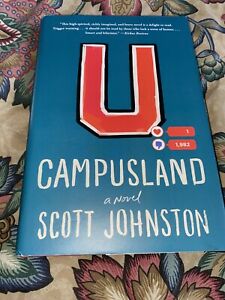
An “outsider” English literature professor is accused, first, of being anti-African American, then later of sexually harassing an “It Girl” Snapchat devotee and would-be “influencer” student. The story is traced through the campus radicals (led by a socialist with a trust fund), the well-heeled benefactors, male-dominated sororities and a range of hapless, self-interested, ideologically-driven or generationally-stranded staff members and administrators.
Campusland is nowhere near the heights of Jane Smiley’s Moo or Richard Russo’s The Straight Man, but is a good guide to the emerging trends now stalking universities in the West generally. Put broadly, the traditional “freedom of speech” on campus issue now has to be balanced against the strength of sensitivities on particular issues.
That workplace change is broadening and deepening in the wake of the pandemic. Part of it is in line with the Industry 4.0 trend, but much of it is more specific.
Take the rise of WFH (Working From Home) as a case in point. What is happening now would have been unimaginable in scale even two years ago. Here in Fremantle, for example, a couple work full time into a major international organisation based in Washington DC. Several other international executives are doing the same. Aid and development work has become increasingly home -based, making the tasks even more complicated than normal.
Major organisations like McKinsey are already well advanced on rethinking “the office” in a post-COVID world, much of it revolving around an increasingly mobile workforce. Individual work skill sets are changing. Just think how the word “Zoom” has become a workplace verb as in “to have a meeting”, only with all participants dispersed.
Many workers have discovered that they like working from home, in full or in part. That was relatively easy for organisations to suppress before COVID, but way less so now. In major cities, especially those hard hit by the virus, the desire to avoid public transport, for one, far outweighs any desire to meet around the mythical water cooler for social and professional interaction that was apparently so important.

The speed of the change is important. Take Press, a 2018 British television series written by Mike Bartlett (who also wrote Dr Foster) and starring Charlotte Riley, Priyanga Burford and Ben Chaplin. While mostly testing press ethics (or absence thereof), it is now most interesting because of the way in which it displays workspaces crammed with people. Writing that show now would require a very different approach.
Because COVID has had a major impact on screenwriting as well as on the wider film and television industry. That is both in respect of “how things are done” and “how things are portrayed”. And most if not all industries face that. University learning and teaching will likely never go back to its pre-COVID form because the online delivery mode is the genie well and truly out of the bottle.
So the workplace is changing, and that is helping sharpen the generational changes currently known as “woke”. In reality, we are discussing the nature of and discourse about social and capital advantage and disadvantage. Scott Johnston’s novel revolves around colour, gender, social status and wealth. All four lie at the heart of almost every “woke” analysis.
Right wing outlets like The Spectator see the rise of this outlook as giving the world over to communism. For its proponents, though, it is an essential guide to making a better world.
In many ways this is just the latest iteration of the ongoing changes in generational view. For the boomer generation “the” year was 1968 and all that went with it. For the Woke generation the year might very well be 2020, because the pandemic was in many ways shaped by the very causes in focus: poor and disadvantaged communities (e.g. the African-American community in the USA as well as the Latino one) suffered worst as did the financially disadvantaged. That pattern repeated in places like Italy, Brazil and South Africa.

But has it not been thus forever? The Mauritanian, for example, starring Tahara Rahim, Jodie Foster and Benedict Cumberbatch is a film version of Mohamed Ould Salahi’s fourteen year detention without charge in Guantanamo Bay story. His treatment there was appalling, and well worthy of protest. The film depicts brilliantly the struggle between the need for revenge following 9/11 and the right to fair and due process.

Tim Murphy’s novel, Correspondents, traverses similar material. The daughter of a Lebanese/Irish New England family becomes a high flying journalist in Baghdad during the Paul Bremer administration days but effectively burns out, makes a major professional mistake and goes home. She also forgets about her gay Iraqi journalist friend who somehow gets to the USA. The resolution of all this involves a tragic intersection with the anti-woke right.
The point here is that, essentially, woke is the continuation of concerns for others that have marked earlier generations, but possibly with greater stakes and spread in what is now a more and an increasingly globalised world challenged further by the pandemic-wrought changes.
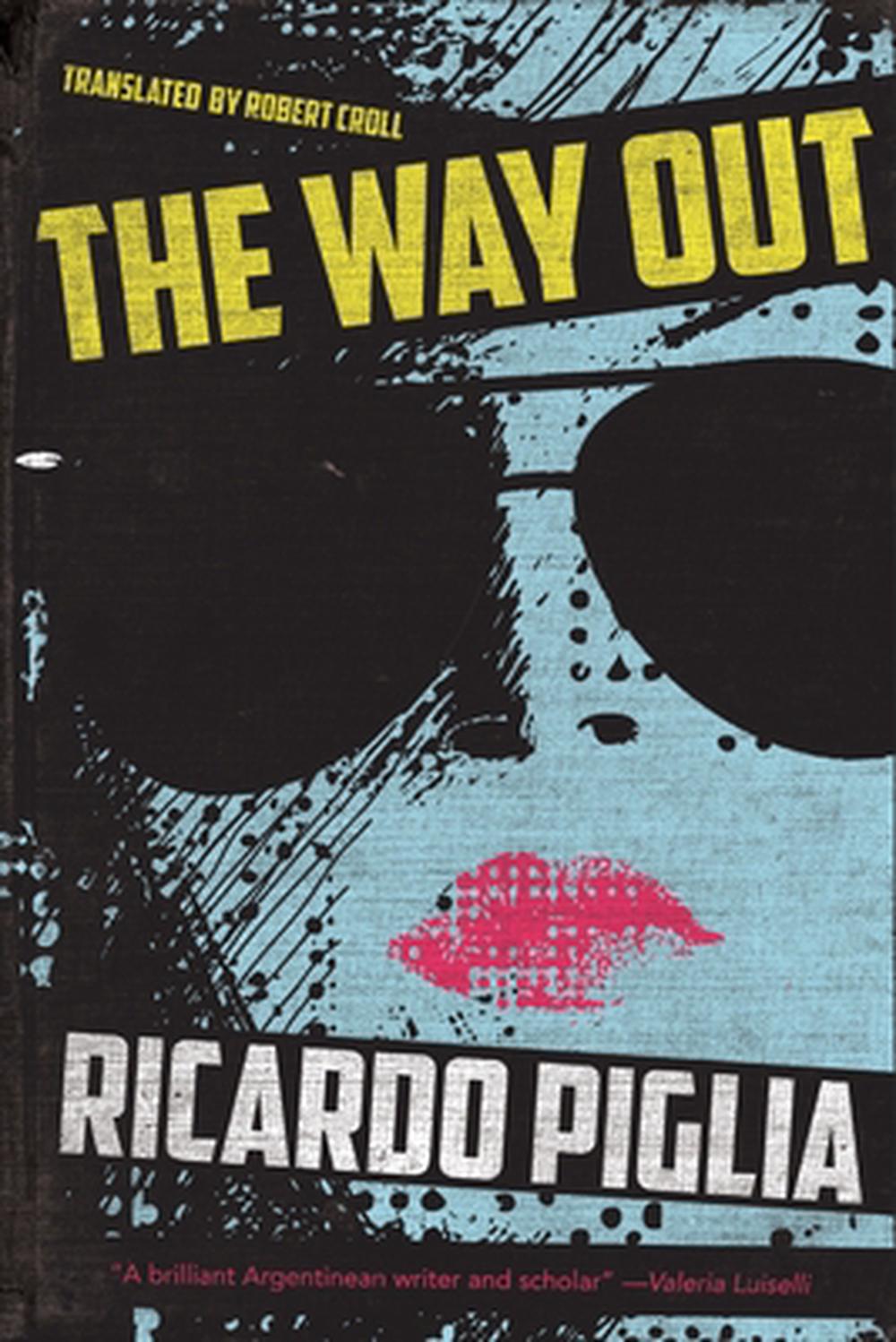
Ricardo Piglia was an Argentinian novelist and Princeton professor. In The Way Out his protagonist (some suggest alter ego) Emilio Renzi joins a small college in New Jersey to teach and complete his latest academic book. But he becomes involved with a colleague (an expert on Conrad) who dies when someone sends her a letter bomb. There is a lot of in-the-know literary and intellectual allusion, and for some readers the book may well typify the self-possession that is a target for the woke.

If that was so, then Jacob Ross’s Black Rain Falling becomes an antidote. Ross hails from Granada (the site for the 1983 American invasion that saw revolutionary leader Maurice Bishop executed) but has long been resident in Britain.
Note – in some woke circles “where are you from” should never be the first question. That is a very fair point – but as an historian (and crime writer/screenwriter) “where, what, why and how” are stock in trade. The need for balance is obvious.
In the novel, “Digger” Digson is a dogged lowly but honest cop on a Caribbean island, surrounded by corruption and a couple of untimely deaths that link to a Caribbean drug operation. His girlfriend is a posh family daughter, his assistant a really sharp but troubled woman who was done wrong in her earlier years. Here it is: class, status, colour and wealth.
The bonus is that Jacob Ross is a seriously great writer who catches the Caribbean lilt and patois in a way that few can match. In a world that continues to change at pace, we need writers like Ross to capture and convey it all to us.
 Brian Stoddart
Wow, Mate, what does come next?? I am asking myself this question every day!! Thought provoking in a troubled world. Some great reading recommendations!! Thanks for taking the time!!
LikeLike
Thanks Clint – the ripples are spreading rapidly I think, and fascinating to watch some of the unforeseen consequences. Stay well there you two
LikeLike