Again, a lag between blog posts brought on by writing distractions, life, and lecturing opportunities with Seabourn.
Right now we are completing a fifteen day voyage on Odyssey from Auckland, New Zealand via Waitangi (where Māori and Europeans signed the Treaty that now governs New Zealand politics), Wellington, Kaikoura (recovering from a severe earthquake), Timaru (from where we went to my hometown of Ashburton for lunch with my brother), Port Chalmers and Dunedin, then the marvellous Stewart Island and its many walking tracks.
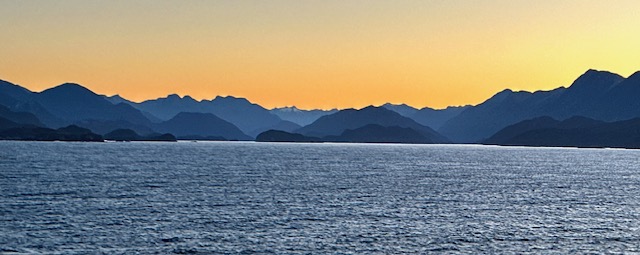
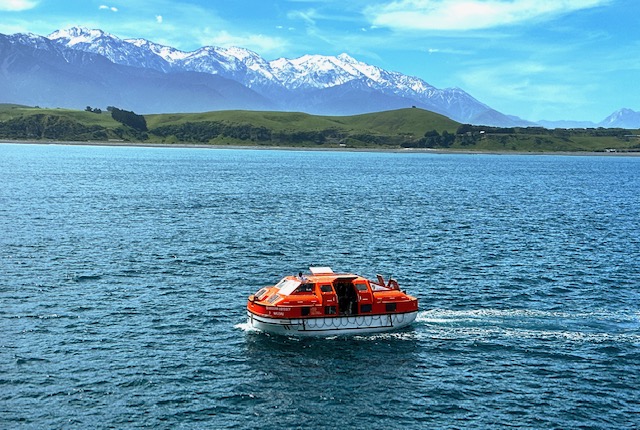
It has all been enjoyable, but the bonus was a jackpot day of fiord cruising through Dusky, Doubtful and Milford Sounds at the southern end of New Zealand. To see all three on the same fine day is a rarity, so all of us aboard were thrilled.

Many of Odyssey’s guests began their journey in Los Angeles a few weeks ago, and have enjoyed an excellent itinerary that took them to Hawaii, French Polynesia, the Cook Islands and several others. But one of the differences for them in these southern waters is that sailing conditions are often stronger – the rough trip from Waitangi to Wellington was the hardest of the trip according to most, and for some the hardest ever. Even some of the crew thought it unusually challenging.

Those crew are marvellous. The galley gang serve up a constant stream of amazing food, while the deck officer crew make everything look easy, most notably yesterday’s exacting navigation into some tricky waters to provide some of the world’s most scenic views. Unobtrusive cabin staff keep up room standards constantly. And a string of daily stops means preparing for docking, setting up, getting excursion parties away on time, taking care of individual guest needs and wrangling the inevitable issues. Then at the end of the port day it is all done in reverse to get the ship away on time, and that also requires coordination with port and pilot crew.
The entertainment team deliver shows, competitions and social events that make most guests’ days exhausting. One highlight is the presence of the great songwriter, Jimmy Webb (Wichita Lineman, Up Up and Away, By the Time I Get to Phoenix etc) who is doing performances and Q&A sessions en route to Melbourne and Sydney concerts. Another was the amazing live sand art creations provided by Māori artist Marcus Winter.
On this trip I have canvassed topics common to Australia and New Zealand (their respective roles in the Pacific, the making and nature of both countries, the origin and state of indigenous affairs, the rivalry between the two countries). The other speaker is an expert on Captain Cook and the early explorers, so audiences have had a wide range of inputs to consider and, as usual, also made great contributions to the discussions.
And the usual bonus of all this? Meeting an extraordinary array of people from different cultures and backgrounds with a common set of concerns for what is happening in their home countries and the world, and the consequences of all that for the future. We might be all at sea, but we’re trying to work it out.
Meanwhile, I have been writing a few things but mainly preparing to rerelease the Le Fanu crime novel series so have been working with my wonderful New Zealand editor, Adrienne Charlton, to get everything in order. And some readers here might be interested to learn that all this has raised the possibility of Le Fanu 5 appearing in due course. Stay tuned.
I have also been finalising a couple of other publishing ventures that I hope to bring news of a bit later on. As usual, they will be on vastly different subjects!
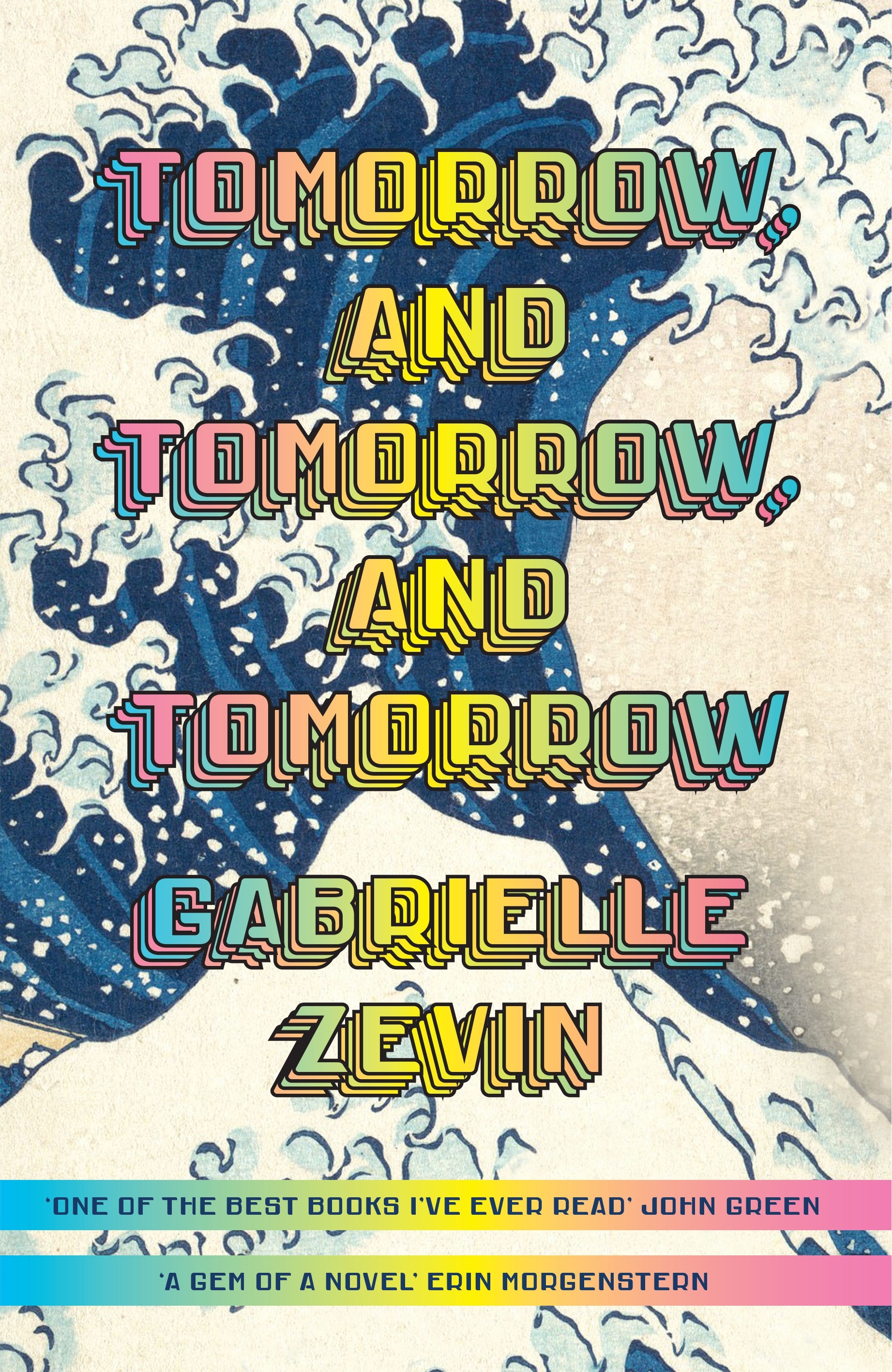
The best thing I have read for a while is Gabrielle Zevin’s novel Tomorrow and Tomorrow and Tomorrow, a wonderfully written story about the relationships between three game designers who strike it big but encounter major social challenges along the way. It is a great entrée to a generation and a subculture that also raises thoughts about personal development and change, success and satisfaction, and about the life arcs that suddenly change direction.
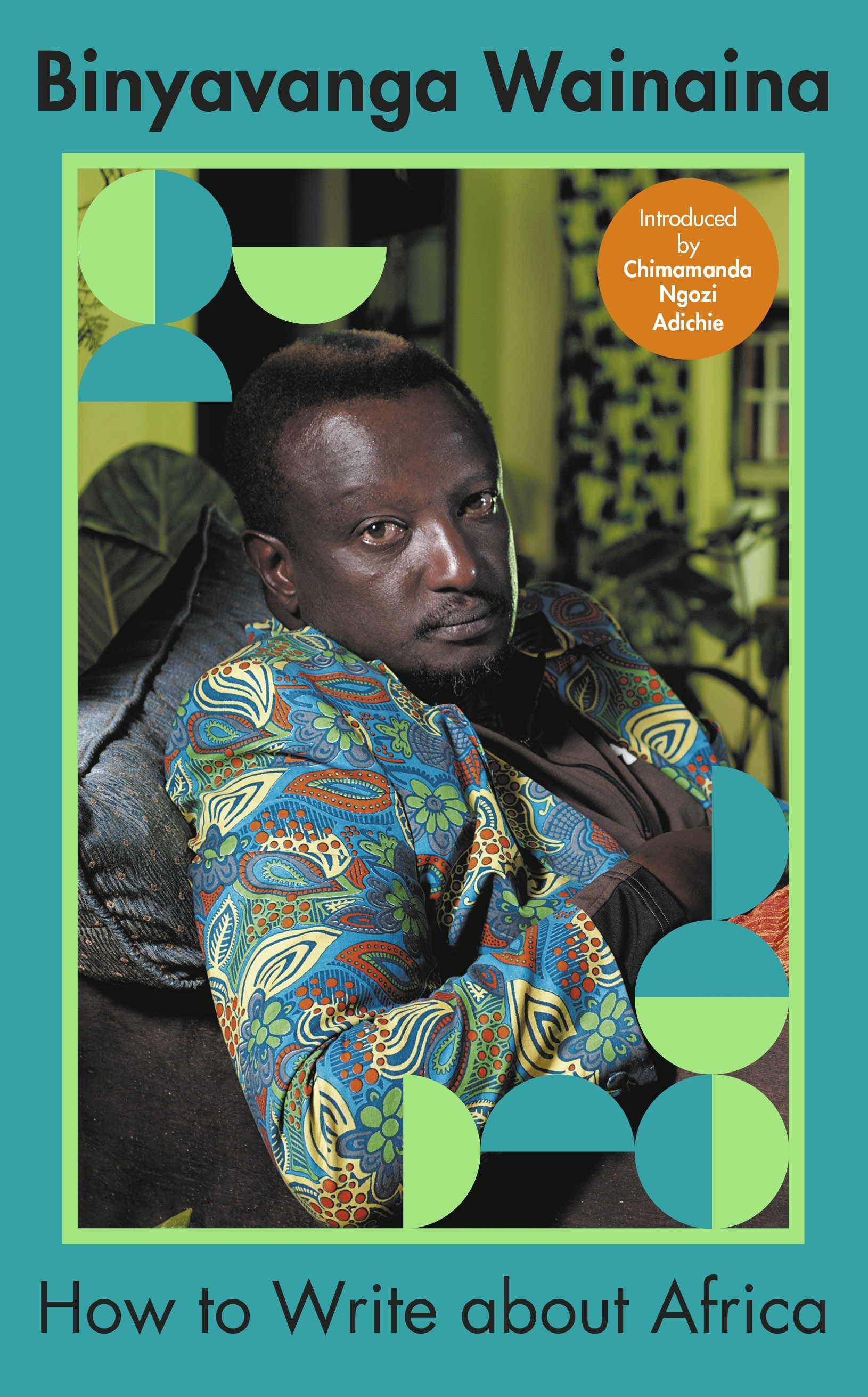
And by far the best non-fiction work I have read in a very long time was Binyavanga Wainaina’s How to Write About Africa, a book that took me way too long to encounter by a Kenyan who sadly is no longer with us. He spent a lot of time in South Africa, effectively as an illegal, wrote about several African states, won a writing competition and as a result mixed in strong circles in America and Europe. These essays are all great but start with the signature one of the title, then read the opening stories on aid and development, then read the rest. He has a hilarious but devastating way of upending all outside views on “Africa”, and is essentially a pioneering decoloniser.
Pip Williams’s The Bookbinder of Jericho is her follow up to the wonderful Dictionary of Lost Words. It is again wonderfully written and very good on the details of the bookbinding process leading up to and following World War One. But, for me, as a story there is a sameness to both books which reduced some of the thrill.
Some life stories are among other things I have read. Sam Neill’s Did I Ever Tell You This? A Memoir is as charming as you might expect, and especially so in that he revealed here his encounter with cancer. It is wry and insightful, and way less gossipy than a lot of people might desire. In that sense it is a very real New Zealand recollection, understated and self-effacing. But it is a delightful read.
Country music star Lucinda Williams’s Don’t Tell Anybody the Secrets I Told You is very different, a searingly frank account of a tough upbringing, a hard road in the music industry and the relatedly complicated personal relationships that eventuated. The book, therefore, adds a dimension to her wonderful music.
Sam Shepard was one of the genuine articles in American theatre and film as both writer and actor, so I anticipated more from Robert Greenfield’s True West: Sam Shepard’s Life, Work and Times than I think has been delivered. It is difficult to explain because all the elements are here about what Shepard wrote and how he became an actor and how he was a fierce individualist and anti-corporate figure. Yet for all that, the real sense of the man is somehow missing. As in all such things, it may just be me – and the book does provide a full sweep of a genuinely creative life.
After a break I have crept back to reading some crime fiction and, inevitably, some familiar names appear. Dennis Lehane’s Small Mercies is a masterclass in the genre, say no more. Read it. Michael Connelly, too, continues to turn out lovely works and I am filling in gaps in the Lincoln Lawyer series.

S A Cosby has become a star in the field and his debut book, Blacktop Wasteland was impressive. His follow ups have done well and won a lot of awards, but for me the recent All The Sinners Bleed was a touch too formulaic and a bit unsurprising: the first black sheriff in a southern US town runs into racism and coverups that put pressure on a personality shaped by family conflict and expectations. Cosby can really write, make no mistake, but this lacks the spark of the earlier books.
David McClosky’s Damascus Station is a thriller set in contemporary Syria where American intelligence agents become caught up in an operation to rescue an asset now at risk. It all goes wrong and understanding needs to be reached. It is strong on tradecraft if a bit short on place, there is not much of the Damascus I knew even if the protagonists perambulate around the city a lot. And the tone is predicably pro-American. But it is a reminder that this conflict has now gone so long it is producing novels.
Karin Pinchin’s Kings Of Their Own Ocean is a marvellous book about the trajectory of the American tuna industry and the future of oceans that are under environmental threat. The story is told through some memorable figures in the American industry and by way of a series of bureaucratic decisions that regulate tuna fishing. It is a monument to the power of research and commitment to a project.

My reading in that area has been sharpened, of course, by the opportunities offered by Seabourn. Earlier this year we travelled from Fremantle to Zanzibar via Indonesia and the Seychelles, crossing the Indian Ocean where commercial fishing has for a long while been controversial. It was also a reminder of change in the geopolitical world with the rise of the “new” Indo-Pacific brought on by the perception that China is trying to take over the world.
The start of the cruise was unusual in that a storm out of Broome saw a semi-domesticated hawk swept onto ship where it stayed until we reached Bali. There was much speculation about its fate, and in the end Australian authorities refused to have it back so it now is reportedly fine at a new home in a Bali bird park.

A series of sea days reminded us how vast that ocean is and we sailed to the north of Diego Garcia, the American base “gifted” by the British government that recently lost the latest round in an on-going court case brought by the original inhabitants who were displaced.
In the Seychelles, the highlight was seeing the long-lived and ubiquitous tortoises that are a reminder of how nature has worked and continues to work.
But the star for me was Stone Town in Zanzibar, once at the epicentre of the Arab slave trade and still the authentic cross-cultural centre from where the dhows still set out to travel up the East African coast, through to the Gulf and even across to India. The memorial to all those slaves is one of the simplest but perhaps the most moving anywhere.

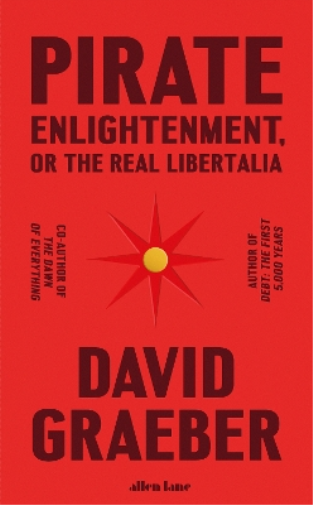
Because of that I read David Graeber’s final book, Pirate Enlightenment, or The Real Libertalia, a fascinating tale of how Madagascar became home to a bunch of pirates fled from the Caribbean, one of whom raided a fabulously wealthy ship owned by Indian princes. Graeber was a renegade academic with an eye for great stories, and although the evidence here is stretched to the limit his imagination was remarkable.
Next year sees more lecture cruises so I am doing more background reading on subjects as far flung as sumo wrestling, present day China, the King and I, and the Pacific fish trade.
I will report back.
Stay tuned, I will try to report back.
 Brian Stoddart
Brian, great read my friend and have missed your updates!
Sent from my iPad
>
LikeLike