
Adam Tooze, the British historian now based at Columbia in New York, has just published an excellent contemporary world analysis in the London Review of Books: https://www.lrb.co.uk/the-paper/v42/n08/adam-tooze/shockwave A specialist in financial history and its impact upon social and political evolution, he skilfully traces interaction between the rise of COVID-19 and the financial/economic chaos it has generated so quickly: https://adamtooze.com/
It is a long-form read, but these days we do have the time, right?
The value of the piece is not just its clarity about the interaction of forces over the past twenty years or so that has brought us to this point, but it’s pointing up of how seemingly small consequences actually have a major bearing on international developments.
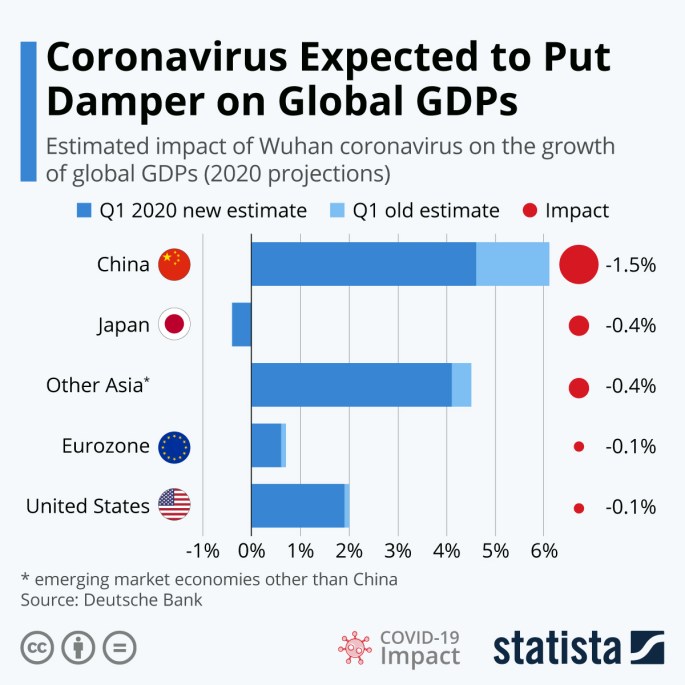
My recent posts, for example, have discussed the role of the now-reviled cruise ships in the spread of the virus. Since then, Western Australian Premier Mark McGowan has said publicly that he wants them to go away and not come back, forgetting that just a short time ago those ships and their passengers were considered a godsend for a state whose economic fortunes have slumped in recent years.
The focus for McGowan and a host of other journalists, podcasters, bloggers and tweeters has been on the passengers aboard and leaving those ships, with many of those commentators wishing for or confidently predicting those would be the last ever such passengers.
But I also spoke about the crew and, sadly, this week brought news of the COVID-19 death of an Indonesian crew member on the Zaandam that was for Americans what the Ruby Princess became for Australia.
That was Wiwit Widarto, a fifty years old Indonesian whose sad passing has attracted little detailed attention, another name in the growing list of victims that also points to a wider condition.

Indonesians and Filipinos have long made up the crew and service staff on the majority of cruise ships, and their discipline is amazing. Talk to most of them and they are away from home and families for several months at a stretch. As soon as a ship touches port and they can get away, they will be at the nearest internet site contacting home. They are the economic lifeline for their families, and this present situation is having a drastic impact there.
Inevitably, that work is drying up as ships remain idle for the foreseeable future and financially challenged companies try to keep afloat, literally. Staff and wage cuts are severe. https://www.msn.com/en-au/news/world/leaked-memo-reveals-some-princess-cruise-and-holland-america-crew-members-will-take-pay-cuts-through-june-as-the-coronavirus-sends-shockwaves-through-the-cruise-industry/ar-BB12s08N
And there is the matter of the virus itself – during last week Indonesian authorities expressed concern about returning crew, noting that almost one hundred Indonesian crew worldwide had tested positive. https://www.thejakartapost.com/news/2020/04/08/concerns-rise-over-importing-covid-19-as-hundreds-of-indonesian-crewmen-come-home.html

The Fremantle Shipping News broadens this crisis into one for maritime trade generally. https://fremantleshippingnews.com.au/2020/04/09/10964/ Somewhere around two million seafarers are responsible for shifting about ninety per cent of international cargo per year, and right now the virus has mauled all plans for crew change.
Remember: there are still cruise ships under quarantine with crew on board. That was the focus of a major operation in and around Sydney harbour recently. https://www.sbs.com.au/news/operation-nemesis-to-see-five-cruise-ships-restocked-and-moved-out-of-sydney-harbour

That it was named “Operation Nemesis” is a very clear indicator of the hostile attitudes that lay behind it. So it was understandable that the Maritime Union of Australia took a very dim view of the government’s actions and approach. https://www.mua.org.au/news/morrison-government-condemned-treatment-cruise-ship-crews
Yet that matter of crew change is even more vast in the commercial shipping world and is, obviously, a major economic and trade concern. https://www.ics-shipping.org/news/press-releases/view-article/2020/03/18/statement-from-guy-platten-re-covid-19 Unlike the cruise industry, this problem is being dealt with largely out of the public eye and is yet another indicator of how much change is being caused by the rise of this virus.
As Adam Tooze points out, handling all this requires a major change in governance and approach because all the old rules have gone.
The MUA, for example, has long been recognised as one of the most militant unions in Australia and is noticeable here in Fremantle, of course. It’s present office commands a view of the Port over the traffic bridge that crosses the Swan River, and down the road that conveys almost all container traffic to and from the loading sites.
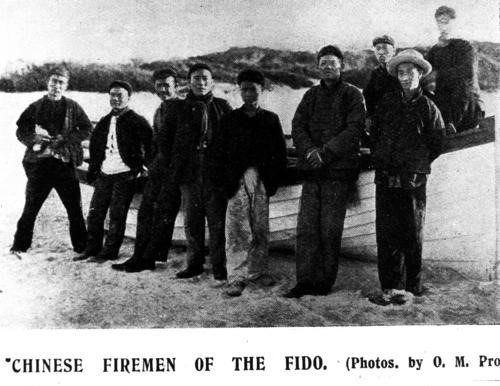
That office is in Kwong Alley, almost certainly named for all the Chinese market gardeners who were in the area until the 1940s, but the MUA might also remember that at one stage there were hundreds of Chinese seamen working in Fremantle even during the White Australia period. The story of people like Boon Juat Lee deserve to be better known. https://www.sbs.com.au/language/english/unwanted-australians-boon-juat-lee
Right now in Fremantle, though, all that is hard to imagine because, as elsewhere, the place is like a ghost town. Ironically, there are now vastly greater numbers of people on the beaches and the bike/walking trails, apparently safe in their view that social distancing does not there apply .
Like everyone else, then, some of my escape has been binge-watching, except that oddly enough my programs of choice have also turned out to be questions of governance and “the system”.
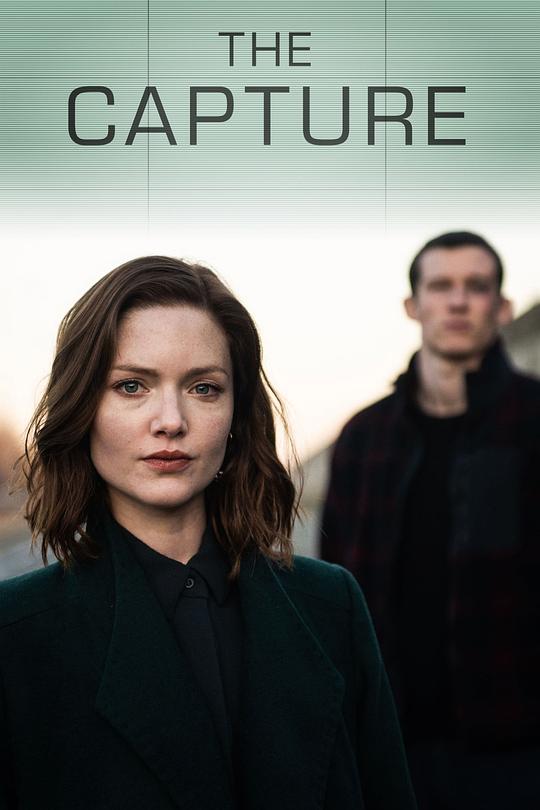
The Capture is one of the best things I have seen for a while, and at least one critic thought the same. https://www.redbrick.me/review-the-capture/ A British soldier is under investigation for war crimes allegedly committed in Afghanistan with video from a helmet camera as the main evidence. Cleared on that following legal argument about the accuracy of the tape, he is then embroiled in a murder case where video evidence clearly suggests he is the perpetrator. The cop in charge of the case has her own problems but gradually believes the soldier to have been framed, and gets drawn into the world of video surveillance and manipulation.
It is written by Ben Chanan, one of those multi-talented writer/director/documentary maker whizzes whose earlier work included The Missing and makes it all look deceptively easy. His key trick is to take an unbelievable idea and make it believable, writing magic. There has been just one season of this so far and no firm word of a second, but do have a look.
Then there is Deep State.
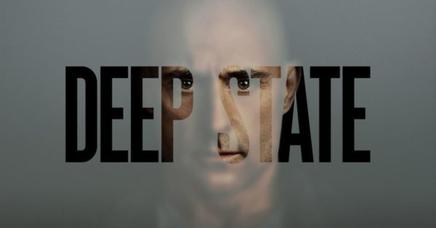
The first season of this is very good. A retired British intelligence operative is reactivated out of his family and marriage in France to end up in Iran with his estranged son from a first marriage. Before going, he makes a tape to give himself some insurance, recording his part in some earlier skulduggery. It then all gets very complicated.
The second season is less convincing, focussed on the son who is now a private contractor caught up in the African badlands of official intelligence and its interactions with private contractors whose aim is making more money.
At the heart of all this is corruption in the system and the futility of the political process which is thwarted at every turn by the objectives of big business. The President of the United States goes through all this unnamed, but there is a reference to a President who “tweets like a teenaged girl”.
There are a few writers here, led by Matthew Parkhill who is another of the writer/producer/showrunner/novelist brigade (he is also married to Rachel Shelley who starred in Lagaan, one of my favourite Indian films). Steve Thompson (Sherlock), Simon Maxwell (American Odyssey), Chris Dunlop (Jericho) and Joshua St Johnson (Grantchester) wrote other episodes.
What have I been reading?
Paul M. Cobb’s The Race for Paradise is set as an Islamic history of the Crusades and has some intriguing sections, but I still prefer Amin Malouf’s The Crusades Through Arab Eyes.
Jennifer Egan’s A Visit from the Goon Squad is set in the LA music world, a madcap different “point of view” unravelling of the story in which an ageing agent struggles to meet the future while hanging on to the past.
Pascal Garnier’s Gallic Noir is a collection of his short novels, a refreshing reminder of the older schools of crime fiction where the story meanders rather than careers, and the stakes are not always high.
Lawrence Block I was lucky enough to meet a few years ago, one of the godfathers of American crime fiction and much more. Small Town is his “New York” novel with all the colour and movement New York had – it is sobering to think just how different it is now.
Diane Williams is acknowledged as one of America’s finest short story writers and her Collected Stories frequently but not always indicate why.
Mohsin Hamid’s Exit West is a refugee story about a couple escaping from the Middle East and gradually becoming estranged. The prose is spellbinding but the story less so.
After all, story is what it is all about, and I have been writing, screenplays.

We await the new normal, and reading Adam Tooze is good preparation.
 Brian Stoddart